
Buying an investment property isn't something you just jump into. It’s a deliberate process of getting your ducks in a row—your financial foundation, your goals, and your financing—long before you even think about scrolling through listings. The prep work is far more critical than the property search itself.
Building Your Investment Foundation

Before you even glance at real estate listings, the most important work you'll do is on paper. A rock-solid financial foundation is the absolute non-negotiable first step. This is more than just a quick budget; it’s about taking a hard look at your finances from a lender's perspective.
This early phase is what separates the dreamers from the doers. It’s where you make sure you’re truly ready to not just buy an investment property, but to hold onto it for the long haul.
Defining Your Investment "Why"
Every savvy investor starts with a crystal-clear goal. What exactly do you need this property to do for you? Your answer here will shape every single decision that follows, from the neighborhood you target to the type of property you buy.
- Long-Term Appreciation: Are you playing the long game? You might be eyeing a growing suburb, betting on the property's value to climb over the next 10-20 years. This strategy is all about building wealth over time, not necessarily about immediate monthly income.
- Monthly Cash Flow: Or do you need that consistent, predictable income right now? If so, you might be looking for a duplex or a multi-family unit in a high-demand rental area, where the rent you collect easily covers your mortgage and all other expenses.
A property that’s a cash flow machine might not offer the best long-term appreciation, and vice versa. Knowing your "why" from the get-go keeps you from chasing shiny objects and helps you build a focused, effective portfolio.
Assessing Your Financial Readiness
Once you know your goal, it's time to get real with your finances. Lenders are going to put your financial life under a microscope, so you need to see what they see. The big one here is your debt-to-income (DTI) ratio, a key metric that stacks up your total monthly debt payments against your gross monthly income.
For investment properties, lenders typically want to see a DTI below 43%. A lower number tells them you can comfortably handle another mortgage without breaking a sweat.
Let's say your gross monthly income is $8,000, and your total monthly debts (car loan, student loans, credit cards) add up to $2,000. Your current DTI is 25% ($2,000 / $8,000). That's a good spot to be in, leaving you plenty of room to take on a new mortgage.
Planning for the Down Payment and Reserves
Getting a loan for an investment property is a different ballgame than for your own home. You're almost always going to need a bigger down payment. For a conventional investment loan, you should be prepared to put down at least 20-25% of the purchase price.
But it doesn't stop there. You absolutely need cash reserves. This isn't just an "in case of emergency" fund; it's a core part of any sound investment strategy. A solid rule of thumb is to have at least six months' worth of total property expenses—mortgage, taxes, insurance, and some buffer for maintenance—stashed away in a separate account. This safety net means a month of vacancy or a busted AC unit won't send your entire investment off the rails.
To really nail this foundational stage, it helps to get familiar with the essential property investment strategies that seasoned pros use. This knowledge gives you a clear, actionable roadmap to align your finances with your goals, setting you up for success.
Securing the Right Investment Loan

Let's get one thing straight: financing an investment property isn't like getting a mortgage for your own home. Lenders see it as a business transaction, which means they play by a different set of rules. You need to know the game.
The terms are often stricter, and the options can feel overwhelming at first. But understanding these differences is the key to landing the right loan—one that fuels your investment strategy without stretching you too thin.
Conventional Loans: The Standard Route
For most investors dipping their toes into how to buy investment property, a conventional loan is the most common path. But lenders have higher expectations when you’re not the one living in the house. It's just business.
You should be prepared for a down payment of at least 20-25%. This larger upfront investment shows the lender you have skin in the game and reduces their risk. They’ll also scrutinize your credit score more intensely, usually looking for a 640 or higher, with the best rates saved for those well into the 700s.
On top of that, lenders want to see you have cash reserves. We talked earlier about having six months of expenses saved as a personal buffer, but for a loan, it can be a hard requirement. It proves you can handle vacancies or an unexpected major repair without missing a mortgage payment.
A key takeaway for investors is that a conventional loan treats your property like the business it is. The stricter requirements are there to ensure you’re not just buying a property but are also financially prepared to manage it effectively.
Government-Backed and Creative Options
While conventional loans are the go-to, they certainly aren't your only choice. Exploring alternative financing can sometimes unlock unique opportunities, especially if you're a first-time investor.
- FHA Loans for Multi-Family Properties: This is a classic "house hacking" strategy. If you buy a property with two to four units and live in one, you might qualify for an FHA loan with a down payment as low as 3.5%. The rental income from the other units can help cover your mortgage, making it a powerful way to kickstart your portfolio.
- Home Equity Line of Credit (HELOC): Already own a home with some serious equity built up? A HELOC can be a flexible source of cash for a down payment. It basically acts like a credit card secured by your home, letting you draw money as you need it.
- Seller Financing: This one is less common, but if you find a motivated seller, they might be willing to finance the property for you. It's a great option if you can negotiate favorable terms directly with the owner and bypass the traditional banks entirely.
These creative strategies require a bit more legwork and careful thought. For instance, while FHA loans have that attractive low down payment, they also come with mortgage insurance premiums (MIP) that will add to your monthly cost.
Thinking Beyond Traditional Real Estate
When you're lining up a loan, it's also smart to think about what types of properties are gaining traction. The trends in investment property buying are always shifting, and sector selection is crucial.
PwC's Emerging Trends in Real Estate® report notes growing interest in alternative sectors like data centers and life sciences facilities, alongside traditional assets. This shows that financing isn't only about single-family homes. Thinking bigger can open up entirely new doors. You can check out more global real estate trends to see how different sectors are performing.
Ultimately, picking the right loan comes down to your personal financial situation and your investment goals. It’s about more than just finding the lowest interest rate; it’s about finding a loan that actually aligns with your strategy. Whether you're aiming for a single-family rental or a multi-unit property you can house-hack, the right financing makes all the difference.
Analyzing Markets and Finding Properties
A great investment is as much about the spreadsheet as it is about the street. Once you have your financing sorted, it's time to put on your detective hat. The real work begins now: pinpointing the right market and, within it, the right building.
This is where you learn to look past the fresh paint and staging furniture. We'll use a hypothetical market to break down how to do your homework, focusing on the numbers and trends that separate a high-performing asset from a money pit.
Digging into Neighborhood Data
Let's be clear: not all neighborhoods are created equal, especially from an investment standpoint. A trendy urban district might offer fantastic cash flow from young professionals, while a quiet, family-focused suburb could be a goldmine for long-term appreciation. Your first job is to decide which of those outcomes aligns with your goals.
You need to focus on data points that signal real, sustainable growth.
- Job Growth: Look for areas with a diverse and expanding job market. A new hospital wing, a growing tech hub, or major corporate relocations are all flashing green lights for future rental demand.
- School District Performance: Never underestimate the power of a good school. High-performing school districts are a magnet for families, which translates to stable, long-term tenants and consistently rising property values.
- Future Development Plans: Get familiar with the local government's website. Are there plans for new infrastructure, like improved public transit? What about new parks or commercial developments? These projects can dramatically boost a neighborhood's appeal and your property's value.
The process is about starting broad and then zooming in, using data to guide you from the city level right down to a specific front door.
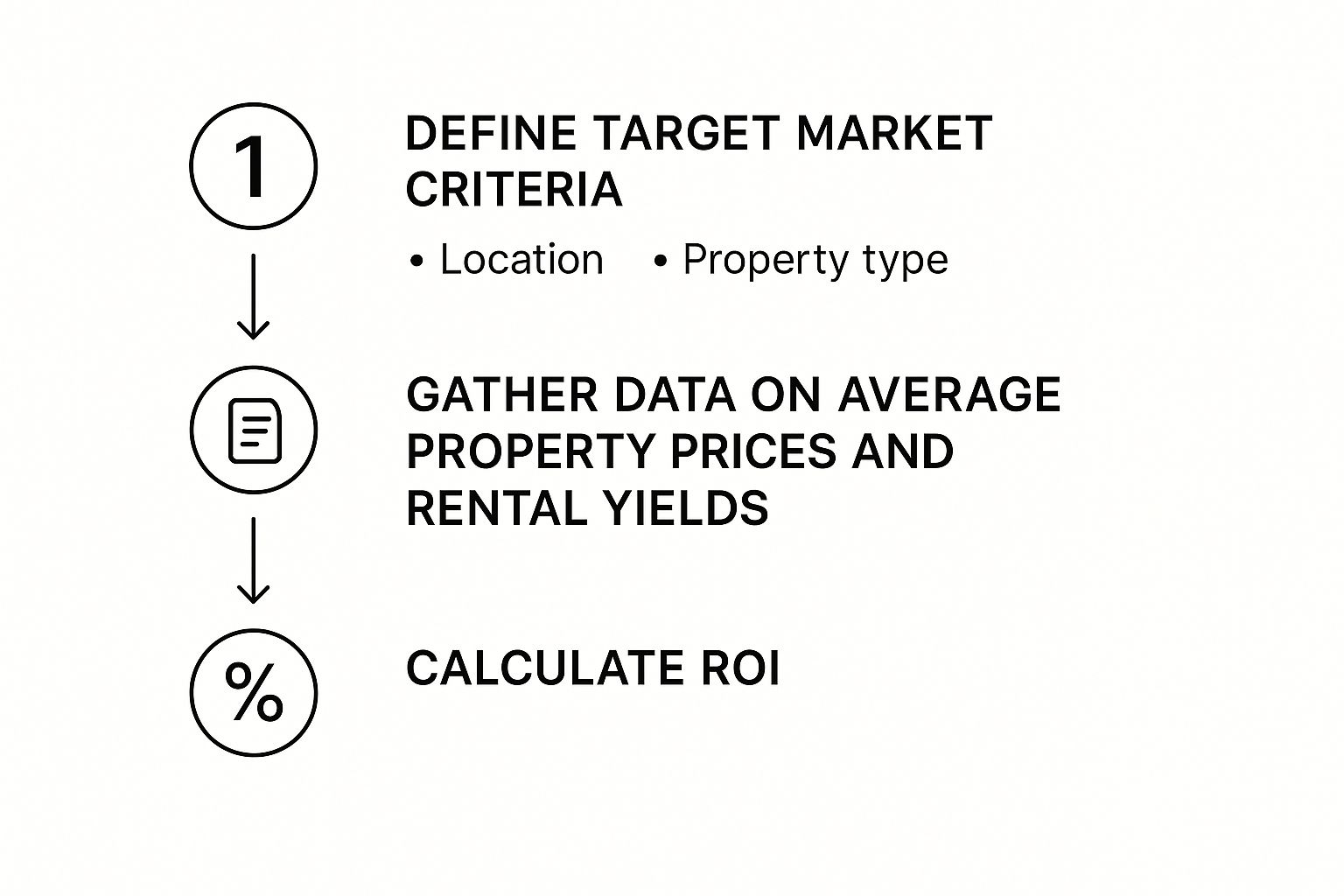
This roadmap shows how defining your criteria, gathering hard data, and calculating returns are all interconnected steps toward making a genuinely smart purchase.
Analyzing the Key Investment Metrics
Once you’ve targeted a neighborhood or two, it's time to run the numbers on actual properties. Leave your emotions at the door; every decision from here on out has to be driven by data.
To do this right, you need to get comfortable with a few key metrics. If you're new to this, it's worth brushing up on the 5 Key Metrics Every Real Estate Investor Should Track to build a solid foundation.
You'll hear investors talk a lot about capitalization rate (cap rate) and cash-on-cash return. Think of the cap rate as a quick snapshot of a property's potential return. The cash-on-cash return, on the other hand, tells you exactly how hard the money you actually pulled out of your pocket is working for you.
A critical rookie mistake is underestimating expenses. You must be realistic. Factor in property taxes, insurance, any potential HOA fees, and a budget for maintenance—a good rule of thumb is 1-2% of the property value annually. And don't forget vacancy! A conservative vacancy estimate might be 5-8%, which means you budget for the property to be empty for about one month a year.
Choosing the Right Property Type
The final piece of this puzzle is choosing a property type that fits your goals, your budget, and, just as importantly, your desired level of involvement. Each type has its own rhythm, especially in a diverse market.
To make this easier, let's break down the most common options.
Comparing Investment Property Types
| Property Type | Potential Cash Flow | Appreciation Potential | Management Effort | Financing Difficulty | Ideal Investor Profile |
|---|---|---|---|---|---|
| Single-Family Home | Moderate | High | Low-Moderate | Easiest | An investor seeking long-term growth, stable tenants, and a straightforward asset. |
| Condo | Moderate-High | Moderate | Low | Easy | A hands-off investor, someone new to landlording, or a buyer focused on amenities. |
| Multi-Family (2-4 Units) | High | Moderate-High | High | Moderate | An investor focused on maximizing cash flow, scaling a portfolio, and house hacking. |
So, what does this look like in practice?
A single-family home in a sought-after school district is a classic appreciation play. You're betting on long-term value growth. In contrast, a duplex near a university is practically built for immediate cash flow from student rentals. And a sleek condo in a downtown area might be perfect for a new investor who loves the idea of rental income but doesn't want to deal with landscaping or roof repairs, thanks to the HOA.
By weaving together this big-picture market research with a sharp-pencil analysis of individual properties, you can confidently find an investment that's perfectly positioned to hit your financial goals.
Executing Due Diligence and Closing the Deal

Getting your offer accepted on an investment property feels like you’ve crossed the finish line, but hold on—it’s really just the start of the final lap. This next phase, due diligence, is your single most important chance to protect your money and make sure the numbers you crunched on paper actually line up with reality.
This is your time to pull back the curtain and find any skeletons in the closet before the deal is final. Skipping or rushing through this stage is one of the most expensive mistakes a new investor can make. It's time to verify everything.
Your Due Diligence Game Plan
Think of due diligence as a forensic investigation of your investment, not just a quick walk-through. It’s a methodical process to confirm the property's physical condition, its legal standing, and its true financial viability. This is when you call in the pros and leave no stone unturned.
Here’s what you absolutely need to focus on during this critical window:
- The Professional Home Inspection: This is completely non-negotiable. A licensed inspector will crawl from the foundation to the roof, digging into the major systems—HVAC, plumbing, electrical—and checking the home's structural integrity. Pay extra close attention to the big-ticket items that could obliterate your cash reserves.
- A Meticulous Title Search: The title company is your best friend here. They'll conduct a search to confirm the seller legally owns the property and that there are no hidden liens, claims, or judgments waiting to bite you. This simple step protects you from ownership nightmares down the road that could sink your entire investment.
- Deep Dive into HOA Documents: If the property is in a community with a Homeowners Association, you have to read all the governing documents. Look for red flags like pending lawsuits, upcoming special assessments, dangerously low reserve funds, or restrictive rental rules that could completely derail your strategy.
- Insurance and Zoning Check-Up: You need to confirm two things: that you can get decent insurance coverage at a price that doesn't kill your cash flow, and that the local zoning actually allows for rentals. This is a huge deal in areas with strict rules around short-term rentals.
The Art of the Inspection and Negotiation
That inspection report is now your number one negotiating tool. Don't be alarmed if it comes back with a long laundry list of minor issues; every single house has them. Your focus should be on the heavy hitters—a 20-year-old roof on its last legs, an ancient HVAC system, or signs of foundation trouble.
Once that report is in your hands, you’ve got options. You can ask the seller to handle the repairs, request a credit at closing so you can manage the fixes yourself, or, if the problems are just too big, you can walk away from the deal (as long as you’re still within your inspection contingency period).
This is a business decision, plain and simple. Many investors prefer a seller credit. Why? It lets you control the quality of the work and hire contractors you trust to do the job right after you own the place.
Getting to the Closing Table
As closing day gets closer, you'll be juggling communication between your real estate agent, your lender, and the title company or closing attorney who handles the legal transfer.
The single most important document you’ll get is the Closing Disclosure (CD). By law, you have to receive this at least three business days before you sign. Read it. Then read it again. This document breaks down every single dollar, including your final loan amount, interest rate, all closing costs, and the exact amount of cash you need to bring to the table.
Compare that CD line-by-line with the initial Loan Estimate you received. This is your chance to catch any surprises and ask questions before you're sitting at the closing table with a pen in your hand.
Global real estate markets continue to attract significant capital, making thorough due diligence more critical than ever. According to JLL, global direct real estate investment reached US$759 billion in 2023. With so much competition, knowing every detail of your deal is what separates a smart purchase from a costly mistake. Reading up on how global investment trends are shaping the market can give you a serious edge.
Smart Management for Your New Asset
Getting the keys to your new investment property isn't the finish line—it’s the starting block. What you do next is what separates a high-performing asset from a stressful money pit. This is where smart, proactive management comes into play.
With the closing paperwork signed, your very first decision is a big one: Are you going to manage this property yourself, or hire a professional to handle it for you? There's no single right answer here. It really boils down to your personal goals, how much free time you have, and how comfortable you are with the idea of being a hands-on landlord.
Deciding Your Management Path
Going the DIY route gives you ultimate control and, of course, saves you the management fee, which usually lands somewhere between 8-12% of the monthly rent. The trade-off? You're the one getting a call about a leaky faucet on a Saturday night. You’ll be in charge of everything from marketing and screening tenants to collecting rent and coordinating every last repair.
On the other hand, bringing in a professional property manager transforms your investment into a much more passive income stream. They handle the day-to-day headaches, tapping into their network of trusted contractors and their expertise in the local market. This is a fantastic option for investors who live out of town or those who simply value their time more than the cost of the fee.
Think of it this way: Do you want a second job or a hands-off investment? If you have the time, skills, and stomach for the operational side, self-management can be incredibly rewarding. If not, a great property manager is worth their weight in gold.
The Self-Management Playbook
If you decide to captain the ship yourself, you have to treat it like a business from day one. That means getting organized, establishing clear processes, and knowing your legal obligations as a landlord inside and out.
Your first job is to market the property effectively to attract a great pool of applicants. This isn't the time for blurry phone pictures; high-quality photos and a compelling description are non-negotiable. From there, your tenant screening process needs to be thorough and, most importantly, fair.
- Run Comprehensive Background Checks: You'll want to see a credit report, criminal history, and any past evictions for every adult applicant.
- Verify Income and Employment: A good rule of thumb is to require tenants to have a gross monthly income of at least three times the rent.
- Check References: Don't skip this step! Always call previous landlords to ask about their experience. Did they pay on time? How did they treat the property?
It is absolutely crucial that your entire screening process complies with the Fair Housing Act, which prohibits discrimination based on race, color, religion, sex, disability, familial status, or national origin. The best way to stay compliant and protect yourself legally is to establish consistent criteria and apply it to every single applicant, no exceptions.
Setting Up for Financial Success
Beyond finding the right tenants, self-management requires meticulous financial organization. This isn't just about good practice—it's essential for tracking your property's profitability and making tax season a whole lot less painful.
Before you do anything else, open a dedicated bank account just for your rental property. Every dollar of income and every single expense needs to flow through this account. Trust me, co-mingling your personal and investment finances is a recipe for a bookkeeping nightmare.
Keeping a close eye on your finances is key to maximizing your returns. This includes using dedicated solutions for managing invoices from contractors and vendors. Systems for invoice management specifically for real estate can help you keep everything organized, ensuring you never miss a payment or a valuable tax deduction.
Finally, get an ironclad lease agreement in place. Don't just download a generic template from the internet. A strong lease is your most important tool for preventing disputes. It should clearly spell out every expectation, from rent due dates and late fees to pet policies and maintenance responsibilities, creating the foundation for a smooth, professional relationship with your tenants.
Common Questions About Buying Investment Property
Diving into real estate investing can feel like learning a whole new language. You've navigated financing, researched markets, and signed on the dotted line, but a few key questions always seem to surface right when you're getting started. Let's tackle some of the most common ones we hear from new investors.
How Much Cash Do I Really Need to Start?
It's a lot more than just the down payment. While you should definitely plan for at least 20-25% down for a conventional investment loan, that's really just the starting line.
On top of that, you have closing costs, which usually shake out to be between 2-5% of the home's purchase price.
But the real game-changer? Cash reserves. This is your financial safety net, and it's non-negotiable. A smart goal is to have at least six months' worth of your total expenses—mortgage, taxes, insurance, and utilities—stashed away in a separate account. This is the fund that ensures a month of vacancy or a surprise AC replacement doesn't completely derail your investment.
Having robust cash reserves is what allows you to make smart, patient decisions instead of panicked, costly ones. It’s the difference between weathering a storm and sinking in one.
What Are the Biggest Mistakes First-Time Investors Make?
The most common trap we see new investors fall into is underestimating expenses. It's easy to get laser-focused on that monthly mortgage payment, but that's only one piece of the puzzle. They forget to account for the full picture: property taxes, insurance, surprise HOA fees, and just the general cost of routine maintenance. Trust us, every property will need repairs eventually.
Another major misstep is rushing through due diligence. Skipping a thorough home inspection or failing to really dig into a neighborhood's rental demand and local ordinances is a recipe for a financial headache. The best way to sidestep these common pitfalls is to treat your investment like a business from day one, with meticulous research and a realistic budget.
Should I Form an LLC for My Investment Property?
Setting up a Limited Liability Company (LLC) is a strategic move that offers some serious protection. Think of it as building a legal wall between your investment property and your personal finances—like your family home and savings accounts.
This separation means that if a lawsuit ever comes up related to the rental property, the claim is typically limited to the assets held within the LLC. It puts a cap on your personal risk.
Here’s a quick breakdown:
- Protection: It shields your personal assets from any business-related lawsuits.
- Credibility: An LLC can make your operation appear more professional to lenders, partners, and even tenants.
- Cost: You'll have some state filing fees to get started and potentially annual fees to keep it active.
While there are costs and a bit of administrative work involved, an LLC is a powerful tool for managing risk. We always recommend chatting with a real estate attorney and a CPA to figure out if it's the right move for your specific financial situation and long-term goals. They can give you advice that's actually tailored to you.
Ready to stop scrolling and start investing? The ACME REAL ESTATE FLORIDA team knows the neighborhoods, the numbers, and the strategies to find your next cash-flowing property. Let's make some moves together. Visit us at https://www.acmeflorida.com to get started.
