
If you've been following the Florida real estate market, you've probably felt the whiplash. The last few years were a frenzy—a seller's dream where homes flew off the market in bidding wars. But things are changing. We're seeing a definite shift away from that intense, seller-driven environment.
What's emerging is something much more balanced. Think of it less like a frantic sprint and more like a steady jog. Home prices are moderating, the number of homes for sale is climbing, and sales have cooled off a bit. This isn't a crash; it's a correction. And it's creating a whole new set of opportunities for both buyers and sellers across the Sunshine State.
Understanding The Current Florida Real Estate Landscape
Imagine the Florida housing market as a pendulum. For a long time, it was stuck on one side, creating that wild seller's market where buyers had to pull out all the stops. Now, that pendulum is swinging back toward the middle. It’s finding its equilibrium, which makes for a more stable and predictable landscape for everyone.
This doesn’t mean the market is in trouble. It’s just taking a much-needed breather. After a period of explosive growth, prices are finally starting to level off. This stabilization is a direct result of a few key factors, mainly higher mortgage rates and rising homeowner insurance costs, which have naturally pumped the brakes on buyer demand.
Key Metrics Defining The Market Today
To really get a feel for the current florida real estate market trends, we have to look at the vital signs—the core numbers that tell us what's actually happening on the ground.
- Median Home Prices: This isn't the average, but the middle price point of all homes sold. As of late 2024, the median sale price for a single-family home in Florida was approximately $405,000, showing a slight year-over-year increase. This is our clearest sign that the days of rapid, double-digit price hikes are behind us for now.
- Housing Inventory: This is simply the number of homes available for sale. For a while, there was almost nothing on the market. Now, inventory is rising, giving us a 4.2-month supply of single-family homes. A healthy, balanced market usually has a 5- to 6-month supply, so while inventory is improving, the market still slightly favors sellers.
- Sales Volume: This is the total count of homes sold. We've seen a modest decline in closed sales compared to the previous year. It's another indicator that the market is simmering down from its previous boil.
What This Shift Means For You
So, what does this all mean in practical terms? If you're a buyer, this is good news. You'll face less competition, have more homes to choose from, and regain some much-needed negotiating power. Those days of having to waive inspections or offer way over asking are fading.
For sellers, the game has changed. This new environment requires a smart, strategic approach. Pricing your home correctly is absolutely critical—overpriced homes will just sit. It's a return to the fundamentals of real estate, where solid market knowledge and a little patience go a long way.
Understanding these basics is the key to navigating the Sunshine State's dynamic housing market with confidence, whether you're buying, selling, or just watching from the sidelines.
Key Drivers Shaping Florida's Market
To really understand what's happening in Florida's real estate market, you have to look under the hood. It's one thing to know what's happening, but it's another to know why. Several powerful forces are at play, influencing everything from home prices to the number of "For Sale" signs you see in your neighborhood.
Think of interest rates as the market's gas pedal. When the Federal Reserve tweaks rates, it directly affects how much it costs to get a mortgage. Even a tiny shift can change a buyer's monthly payment by hundreds of dollars, which completely alters their budget and how much house they can afford. We've seen it time and again: as rates go up or down, so does buyer activity across the state.
This delicate dance between borrowing costs and buyer ambition is a core part of all Florida real estate market trends. It's where a homebuyer's dream meets the hard reality of their monthly budget.
The Power of Population Growth
Let's be honest, Florida's appeal is hard to deny. People are still flocking to the Sunshine State, drawn by job opportunities and the lifestyle. This steady stream of new residents is like a constant fuel injection for housing demand. Every person that moves to the state needs a place to live, putting pressure on both rental and for-sale homes.
This migration isn't spread evenly, of course. Big metro areas like Orlando, Tampa, and all of South Florida feel the squeeze most intensely. The result is a persistent demand that helps keep prices from falling, even when other factors (like those pesky interest rates) suggest things should be cooling off.
A growing population is one of the most reliable pillars supporting Florida's real estate values. This demographic tailwind means there is a consistent stream of new buyers entering the market, seeking their piece of the Florida lifestyle.
Construction and Its Role in Balancing Supply
For years, the biggest story in Florida real estate was the severe shortage of homes for sale. Not enough houses on the market was the main reason we saw those crazy bidding wars and sky-high price jumps. The construction industry has been working overtime to try and close that gap.
You can see it everywhere—new housing developments are popping up all over the state. We're talking single-family communities in the suburbs and shiny new condo towers in the cities. This building boom is critical for a few reasons:
- It eases the inventory crunch. Every new home on the market gives buyers another option, which helps cool down the fierce competition for existing houses.
- It meets modern tastes. New builds often have the open floor plans and smart-home features today's buyers want, pulling some demand away from older, dated properties.
- It boosts the local economy. Home construction means jobs, and it supports a whole ecosystem of local businesses, from lumber yards to landscape designers.
Builders are still wrestling with challenges like finding enough skilled workers and dealing with unpredictable material costs, but their hard work is slowly but surely helping create a more balanced and sane market.
Florida's Economic Health and Consumer Confidence
At the end of the day, a strong housing market needs a healthy economy to stand on. Florida's economy has been a standout performer, with steady job growth in major industries like tech, healthcare, and logistics. When people feel secure in their jobs and optimistic about the future, they’re far more willing to make a huge financial commitment like buying a home.
Consumer confidence is the secret sauce here. It's a measure of how people feel about their own finances and the economy in general. When confidence is high, people are ready to invest in real estate. Florida's combination of a business-friendly attitude and a strong job market keeps attracting both people and companies, which provides a solid foundation for the housing sector's long-term health. Once you understand these core drivers—rates, migration, construction, and the economy—you can start to see the bigger picture and make much smarter real estate decisions.
Understanding Home Prices And Property Values
When you start digging into the Florida real estate market trends, it's easy to feel like you're drowning in numbers. Headlines can be confusing, so let's break down the key metrics that actually tell us what’s going on with the market’s health.
You'll often hear two terms thrown around: median home price and average home value. They might sound like the same thing, but they paint very different pictures. The median price is the middle-of-the-road number. Imagine lining up every single home sale from cheapest to most expensive—the median is the one right in the center. This is a fantastic metric because it isn't thrown off by a few mega-mansion sales or a handful of fixer-uppers.
Then you have the average home value. This is a much broader look at what all homes in a given area are worth, not just the ones that sold recently. It gives you a better sense of the overall property wealth in a region. Knowing the difference helps you see the market from more than one angle.
This chart here really shows the dance between inventory, sale prices, and how long it's taking for homes to sell.
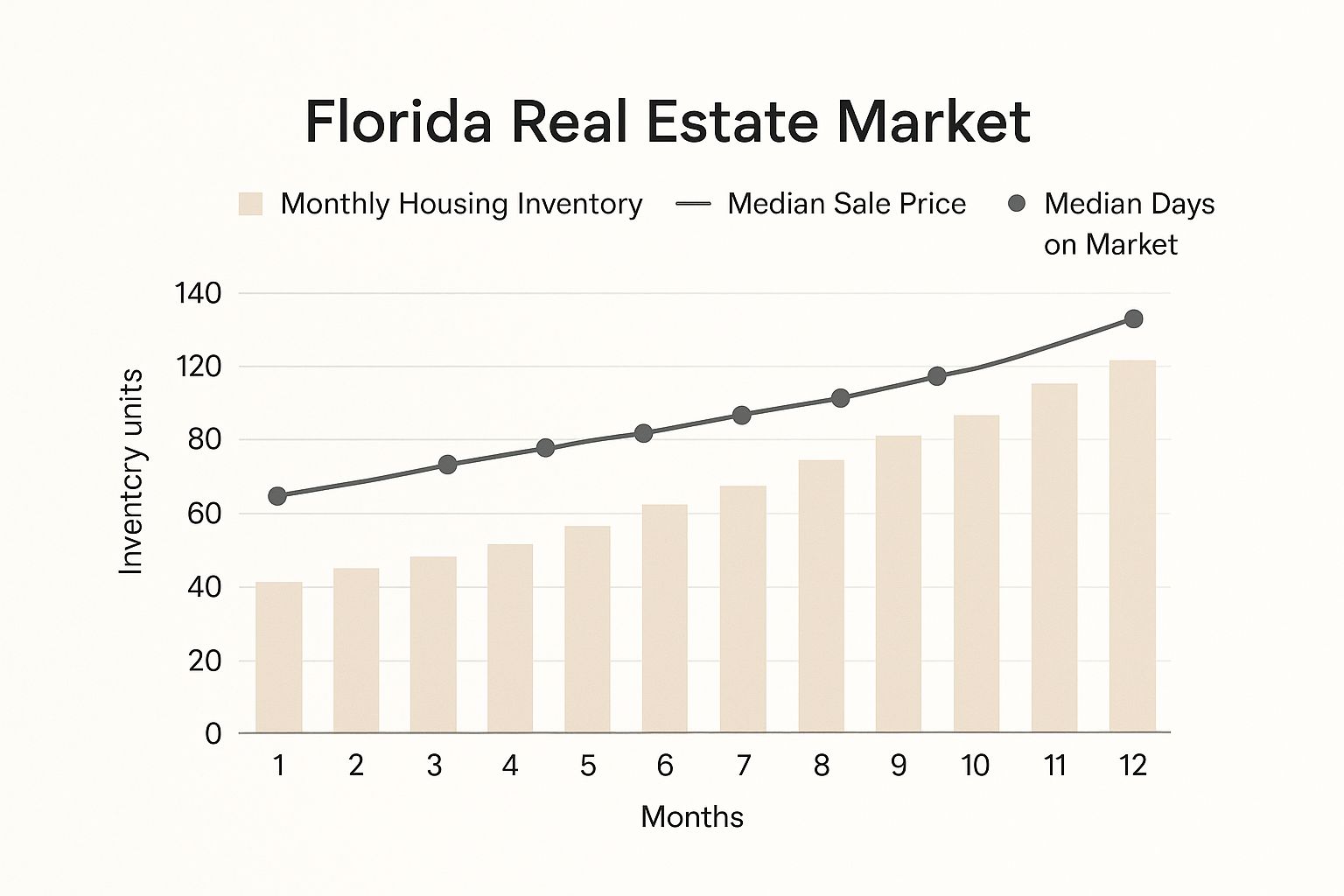
As you can see, when inventory creeps up, it tends to ease the pressure on prices. That's what leads to a more balanced, sustainable market for everyone involved.
What's Happening with Florida Home Prices
After a few years of sprinting uphill, Florida's home prices have finally paused to catch their breath. This isn't a crash; it's a healthy market correction. We’re seeing more homes for sale and a slight pullback from buyers, which has cooled down the once-feverish price growth.
The shift over the past year has been tangible. The median home price in Florida recently clocked in at $405,000, which is up 1.3% from the year before. This moderation reflects the very real challenges of affordability and higher interest rates. But even with that moderation, homes are still going under contract in about 48 days. That tells us that properties priced right are still moving. For a deeper dive, Zillow’s market data page offers some great insights.
This cooling-off period is a critical part of the current Florida real estate story. It signals a return to a more predictable environment where solid fundamentals—like a great location or a home's condition—matter more than just riding a wave of market hype.
A market correction is not a market crash. Think of it as the market catching its breath after a long sprint. It allows prices to realign with underlying economic fundamentals, creating a more stable foundation for future growth.
Regional Differences in Property Values
It's so important to remember that Florida isn't one giant, uniform market. What's happening in a luxury coastal spot like Miami could be the polar opposite of the trends in a booming inland hub like Orlando. You can’t paint the whole state with one brush.
Take a look at this snapshot to see just how much prices can vary across the state.
Florida Regional Home Value Snapshot
This table illustrates the variation in median sale prices and their year-over-year change across major metropolitan areas in Florida, highlighting diverse local market conditions.
| Metropolitan Area | Median Sale Price | Year-Over-Year Change (%) |
|---|---|---|
| Miami-Fort Lauderdale | $570,000 | +7.5% |
| Tampa | $415,000 | +3.8% |
| Orlando | $420,000 | +5.0% |
| Jacksonville | $370,000 | +5.7% |
| Naples | $835,000 | +1.8% |
| The Villages | $376,000 | -1.1% |
As you can see, while most major metros saw an increase, areas like The Villages saw a slight dip, proving that local dynamics are everything.
These local quirks are driven by a mix of factors:
- Local Job Growth: A city with a strong job market is going to have more resilient property values.
- Inventory Levels: One area might be flooded with new condos but starved for single-family homes, creating completely different pricing pressures.
- Insurance Costs: Coastal regions are facing higher insurance premiums, and that absolutely affects buyer demand compared to inland areas.
By looking at both the big-picture statewide trends and the nitty-gritty local factors, you can get a much clearer, more critical view of property values. It's the best way to cut through the noise and make smart decisions based on solid data, not just fear or hype.
Making Sense of Inventory and Sales Volume
To really get a feel for the Florida real estate market, you have to understand the classic push-and-pull of supply and demand. Think of it like a giant set of scales. On one side, you have inventory—all the homes currently for sale. On the other, you have sales volume, which is just the number of homes people are actually buying.
When those scales are balanced, the market is steady. But when one side gets heavier, you start to see dramatic shifts in prices, bidding wars, and negotiating power. This delicate balance is the engine driving everything from your home's value to how long it takes to sell.
This core relationship between available homes and active buyers is what tells us if we're in a buyer's or a seller's market. Nail this concept, and you're already ahead of the game.
What Rising Inventory Means For You
For the longest time, Florida’s housing inventory was exceptionally low. This created a pressure-cooker environment where bidding wars were the norm and buyers felt forced to make almost desperate offers. That's changing now. The scale is tipping as more and more homes hit the market.
For buyers, this is a breath of fresh air. More homes for sale means more choices and less of that frantic, gotta-buy-it-now pressure. You finally have a bit more breathing room to negotiate on the price or ask for things like repairs or seller concessions.
For sellers, it's a different story. More inventory means more competition. With more "For Sale" signs popping up, your home has to shine. Pricing it right from the get-go becomes absolutely critical, and you might need a little more patience. Your property will likely sit on the market a bit longer than it would have a year ago.
What Sales Volume Tells Us About Market Health
Sales volume is the other side of the equation—it's a direct measure of how hungry buyers are. When sales volume is high, it means homes are flying off the shelves, which naturally pushes prices up. When it dips, it's a clear signal that demand is starting to cool off.
The latest numbers paint a pretty clear picture of this shift in Florida. The median home price recently clocked in at $405,000, which is a 1.3% increase from last year. At the same time, the number of homes sold dropped by a significant 8.7%. This slowdown in sales, combined with a 21.9% rise in new listings, shows exactly how moderating demand is easing the pressure on prices. If you want to dive deeper into how this is playing out locally, Redfin's comprehensive Florida housing market data is a fantastic resource.
This cooling demand is a direct result of things like higher interest rates and general affordability challenges, bringing the market back down to a more sustainable, less frenzied pace.
Using Days On Market As A Thermometer
So, how can you tell if your local market is hot or not? One of the best real-world indicators is a little metric called Days on Market (DOM). It’s simply the average number of days a house is listed before the seller accepts an offer.
Think of DOM as a thermometer for the real estate market. A low DOM means homes are selling quickly, indicating a strong seller's market. A high DOM suggests a cooler buyer's market where homes take longer to find a new owner.
Right now, that thermometer is definitely adjusting. The median time a home stays on the market has climbed to 48 days—that’s a full 12 days longer than the previous year. It tells us the whole tempo of the market has slowed down significantly. Watching the DOM in your specific neighborhood is like getting a real-time pulse check on what's happening right outside your door.
By keeping an eye on these three key metrics—inventory, sales volume, and days on market—you can see the real story beyond the headlines. You get a practical, on-the-ground understanding of the market's true condition, which helps you decide when to make your move and how to negotiate with confidence.
The Broader Economic Impact Of Real Estate
When we talk about Florida real estate market trends, it's easy to get laser-focused on home prices and inventory. But looking at the market that way is like trying to understand an entire ecosystem by only studying one tree. The housing market is so much more than a list of transactions—it's a powerful engine driving the whole state's economy.
Think of it as the heart of Florida's economic body. With every beat—every home sale, construction project, or even a simple kitchen remodel—it pumps vitality into countless other industries. This ripple effect spreads far beyond the buyer and seller, creating jobs and opportunities for real estate agents, mortgage brokers, contractors, inspectors, and designers. It's this deep, interconnected web that has government bodies and financial institutions watching the housing sector like a hawk.
Real Estate As A Cornerstone Of Florida's Economy
The sheer economic force of real estate in Florida is staggering, contributing billions upon billions each year through construction, sales, and rentals. This isn't just a side note; it's a central pillar of our state's financial health.
Organizations like Florida Realtors and state economists are obsessed with tracking market data for good reason. A shift in home sales or prices isn't just a housing story; it’s a direct signal of bigger economic changes on the horizon. These numbers help forecast everything from state tax revenue to how much people are willing to spend at local businesses.
Consumer confidence is also tied directly to the housing market's performance. When property values are climbing, homeowners feel more financially secure. That confidence often translates into more spending on cars, vacations, and other goods, giving the entire economy a boost. But when the market cools, people tend to hold onto their wallets a bit tighter, which can signal a potential slowdown for everyone.
How Real Estate Activity Creates Jobs
A buzzing real estate market is a job-creating machine, and the roles it creates are incredibly diverse. It’s not just about the people directly involved in the sale. Let’s follow the lifecycle of just one new housing development to see how it works:
- The Build: First, you have the architects and engineers designing the project. Then come the armies of construction workers, electricians, plumbers, and roofers who bring it to life.
- The Supply Chain: All those workers need materials. This fuels demand for lumber, concrete, drywall, appliances, and wiring, supporting manufacturing, logistics, and trucking jobs across the state and beyond.
- The Move-In: Once a family moves in, the spending continues. New homeowners are a major driver of retail, buying furniture, hiring landscapers, and stocking up at home improvement stores.
This chain reaction shows how a single new home can support dozens of jobs across totally different sectors. It’s why a slowdown in construction can send a chill through the local economy, leading to job losses that ripple through the entire community.
A healthy housing market doesn't just build homes; it builds communities. The property taxes generated from real estate transactions fund essential public services like schools, infrastructure projects, and first responders, directly linking the market's performance to the quality of life in your neighborhood.
For real estate investors, understanding the bigger picture is key. Things like sophisticated 1031 exchange strategies don't just impact an individual's portfolio; they influence property turnover and investment flows for the whole market. When you appreciate this wider perspective, you realize the trends in Florida's real estate market aren't just numbers on a chart—they are the vital signs of the state's economic well-being.
What Experts Predict For The Future Market

So, what does the crystal ball show for Florida real estate market trends? Most analysts agree we're moving into a period of adjustment, followed by much steadier, more sustainable growth. The frantic, pedal-to-the-metal market of the last few years is giving way to a more predictable pace.
This isn't a sign of a crash. Think of it as a healthy recalibration—the market is finally taking a much-needed breath.
In the short term, expect more stabilization. Price growth will likely be modest, and some metro areas might even see a slight dip as inventory finally starts to catch up with demand. For buyers, this is great news; it opens a window of opportunity where you actually have some negotiating power again. For sellers, it just means that smart pricing and a little patience are the new keys to success.
Long-Term Outlook Beyond Next Year
Looking further down the road toward 2030, Florida's fundamental strengths are poised to take center stage once again. The state's powerful combination of strong population growth and a robust economy creates a solid foundation for long-term appreciation. That constant flow of new residents means a constant demand for housing.
Most economists are projecting a gradual but firm rebound in home values after this initial adjustment period. Some projections suggest the median single-family home price could climb toward the $470,000 to $500,000 range by the end of the decade, assuming major economic factors stay on a relatively stable path.
While forecasts give us an educated roadmap, they are never guarantees. Unpredictable wild cards like federal interest rate decisions, state-level insurance reforms, and bigger economic shifts can always change the market's direction.
Key Variables To Watch
Several key factors will be steering Florida's real estate future. These are the big variables that could either hit the accelerator or tap the brakes on the trends we're seeing, so they're absolutely worth keeping an eye on.
- Federal Monetary Policy: What the Federal Reserve does with interest rates will continue to be a huge influence. It directly impacts buyer affordability and the overall buzz in the market.
- State-Level Economic Performance: Florida’s ability to keep attracting new businesses and creating high-paying jobs is crucial. A strong job market directly supports housing demand and property values.
- Insurance Market Stability: This is a big one. The ongoing headache of rising homeowner insurance costs is a significant headwind for the market. Any real solutions from legislators or the market itself could have a massive, positive impact.
By understanding both the optimistic forecasts and the potential hurdles, you can build a smarter, more resilient game plan for your own real estate goals. This forward-looking perspective is crucial for making confident decisions, whether you’re ready to jump in now or planning your move for the future.
Got Questions? We've Got Answers.
Trying to make sense of the Florida real estate market trends can leave your head spinning. Let's tackle some of the most common questions we hear, breaking it all down into simple, straight-up answers to help you on your real estate journey.
Is Florida A Buyer's Or Seller's Market Right Now?
Right now, Florida is in a transition phase, moving toward a much more balanced market. For the last few years, it’s been an absolute frenzy—a seller's market where low inventory meant sellers held all the cards.
That's changing. We're seeing inventory levels creep up, especially for condos, which is tipping the scales back toward the middle. What does this mean for you? Buyers suddenly have more options, face less cutthroat competition, and can actually negotiate again. Sellers, on the other hand, need to be smarter about pricing and more patient. It's a much healthier, more sustainable environment than the chaos we've seen recently.
How Do Interest Rates Affect My Home Buying Power?
Think of interest rates as the ultimate governor on your budget. Even a tiny shift in mortgage rates can drastically change your monthly payment, which in turn decides how much house you can actually afford. When rates go up, your buying power shrinks because more of your payment is eaten up by interest instead of going toward the loan itself.
For example, just a 1% jump on a $350,000 mortgage can tack on hundreds of dollars to your monthly payment. It's the single biggest reason why some buyers get priced out or have to scale back their wish list when rates are high. On the flip side, when rates drop, it’s like getting a raise—you can suddenly qualify for a more expensive home without changing anything else.
Your home buying power is a direct reflection of what's happening in the lending world. This is why getting pre-approved is so critical. It locks in a rate and gives you a crystal-clear picture of what you can realistically afford in today's market.
Which Parts Of Florida Are Seeing The Biggest Changes?
Florida isn't one big market; it's a patchwork of dozens of smaller ones, and the shifts we're seeing are playing out very differently from one region to the next.
- South Florida (Miami, Fort Lauderdale): The condo market here is getting a major shakeup. A flood of inventory combined with new building regulations is creating a prime buyer's market for anyone looking for a condo.
- Southwest Florida (Naples, Fort Myers): These beautiful coastal spots are facing significant insurance costs. It’s a huge headwind that's cooling off buyer demand and starting to nudge prices downward.
- Central Florida (Orlando, Tampa): Things are a bit more stable in the middle of the state. Strong job growth and a constant stream of new people moving in are keeping the market humming along, though even here, things have definitely cooled from their peak.
Every area has its own story. You absolutely have to zoom in on the specific neighborhood you're interested in rather than relying on a statewide headline.
Ready to make your move in the Sunshine State? The ACME REAL ESTATE FLORIDA crew knows Orlando inside and out. We're here to help you navigate the market with insider knowledge and zero stress. Let's find your perfect spot together. Visit us at https://www.acmeflorida.com to get started.
