
As Floridians, we understand that hurricane season is an inevitable part of life. While the familiar routine of tracking cones and boarding up windows is second nature, true readiness goes much deeper. A comprehensive plan is not just about weathering the storm; it is about ensuring your family's safety, protecting your property, and streamlining recovery in the aftermath. This is where a detailed, actionable hurricane preparedness checklist for Florida becomes your most critical tool.
This guide moves beyond the generic advice of simply stocking up on water and batteries. We will provide a room-by-room, phase-by-phase breakdown that covers every aspect of preparation. You will find specific, practical steps for securing your home, assembling a robust supply kit, organizing vital documents, and creating a clear evacuation plan. We will also outline the crucial actions to take immediately after a storm has passed, helping you navigate the often-chaotic recovery process with confidence and clarity.
Our goal is to provide a definitive resource that transforms hurricane preparedness from a frantic, last-minute scramble into a calm, methodical process. Whether you are a lifelong resident or new to the Sunshine State, this checklist is designed to empower you with the knowledge needed to face any storm. We are committed to providing information that supports safe and equitable housing opportunities for all. This detailed plan will help you build a resilient strategy, offering peace of mind long before the first watches and warnings are issued. Let's begin building your storm-proof plan.
1. Emergency Water Supply (1 Gallon Per Person Per Day for 7 Days)
After a major storm, access to safe, clean drinking water can be severely compromised for days, or even weeks. Municipal water systems can fail due to power outages or become contaminated by floodwaters, making your stored supply the most critical asset in your hurricane preparedness checklist for Florida. The official recommendation from FEMA and the Florida Division of Emergency Management is to store a minimum of one gallon of water per person, per day, for at least seven days.
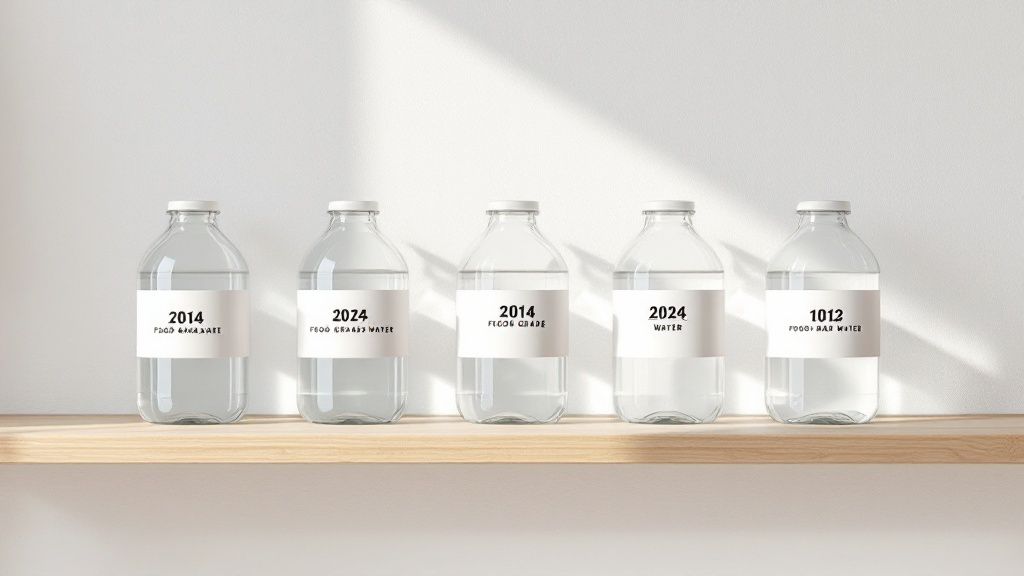
This one-gallon allocation is intended to cover drinking, cooking, and minimal personal hygiene. For a family of four, this means having at least 28 gallons of water stored securely before a storm makes landfall. The devastating impacts of recent hurricanes underscore this necessity. Following Hurricane Ian in 2022, many Southwest Florida communities were under boil-water notices or had no running water for over a week, making stored supplies essential for survival.
Practical Tips for Storing Water
To ensure your water supply is safe and accessible when you need it most, follow these actionable tips:
- Diversify Your Containers: Instead of one large, hard-to-move container, store water in a combination of commercially bottled water cases and smaller, clean, food-grade containers. This makes it easier to transport and ration.
- Safe Storage Location: Keep water in a cool, dark place like a pantry, closet, or garage. Direct sunlight can degrade plastic and promote bacterial growth. Ensure it is stored away from chemicals like gasoline or pesticides, which can leach through plastic.
- Long-Term Storage Solutions: If you have the space and want to be prepared for extended disruptions, consider a larger, more permanent solution. For substantial long-term water storage, consider options like a 1000 Gallon Vertical Water Tank to secure your supply.
- Backup Purification: Keep a secondary method for water purification on hand. This can include a portable water filter, iodine tablets, or water purification tablets. These are invaluable if your primary stored water runs out.
- Pre-Storm Water Reserves: As a storm approaches, fill your bathtubs and large pots with water. This water is not for drinking but can be used for flushing toilets, washing, and cleaning, preserving your precious drinking water supply.
2. Non-Perishable Food Supply (3-7 Days)
Power outages are one of the most common and prolonged consequences of a major hurricane, rendering refrigerators and freezers useless. A well-stocked supply of non-perishable food that requires no cooking or refrigeration is a non-negotiable part of any hurricane preparedness checklist for Florida. While the official state recommendation is a minimum three-day supply, the reality of recent storms suggests aiming for at least seven days is a much safer strategy.
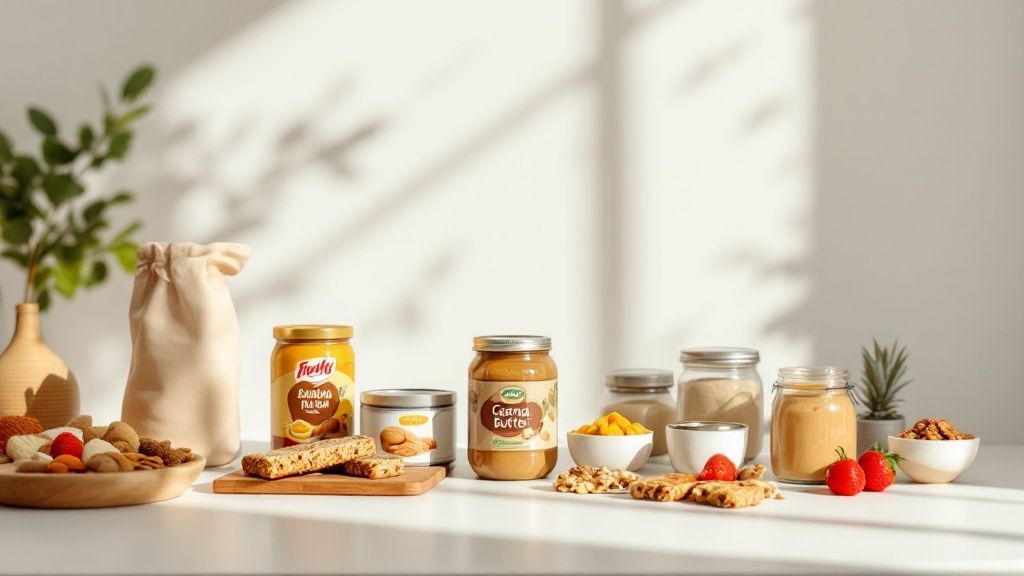
This extended supply ensures you can sustain yourself and your family while infrastructure is repaired and supply chains are restored. In the wake of Hurricane Ian in 2022, many residents in Fort Myers and surrounding areas were cut off from operational grocery stores for five to eight days, relying entirely on the food they had stored. Similarly, after Hurricane Charley devastated Punta Gorda in 2004, access to fresh food was severely limited for over a week. Having a robust food supply is not just about convenience; it is a critical component of post-storm survival and comfort.
Practical Tips for Stocking Your Pantry
To build a useful and reliable emergency food supply, focus on items that are easy to store, prepare, and consume. Follow these actionable tips:
- Prioritize Ready-to-Eat Items: Stock up on foods that require zero preparation, such as protein and granola bars, peanut butter, crackers, dried fruit, nuts, and canned meats, fruits, and vegetables. These provide necessary calories and nutrients without needing electricity or gas.
- Don't Forget Special Dietary Needs: Ensure your kit includes any necessary items for infants (formula, baby food), toddlers, elderly individuals, or those with specific health conditions. It is also crucial to stock a sufficient supply of pet food and extra water for your animals.
- Include Comfort Foods: The stress of a hurricane's aftermath is immense. Including comfort items like cookies, hard candy, instant coffee, and sweetened cereals can provide a significant psychological boost, especially for children.
- Plan for Manual Access: While many canned goods now have pop-tops, it's essential to pack a reliable, non-electric manual can opener as a backup. Also, include disposable plates, cups, and utensils to minimize the need for washing.
- Rotate Your Stock: Every six months, check the expiration dates on your emergency food supply. Use any items nearing their expiration date and replace them with fresh ones. This ensures your kit is always ready and prevents waste.
3. Battery-Powered or Hand Crank Weather Radio (NOAA Weather Radio)
When a hurricane strikes Florida, traditional communication channels like the internet, cell service, and television are often the first to fail. A NOAA Weather Radio is a dedicated receiver that broadcasts continuous weather updates, hazard information, and emergency alerts directly from the National Weather Service (NWS). This makes it an absolutely critical lifeline for receiving life-saving information when all other systems are down.
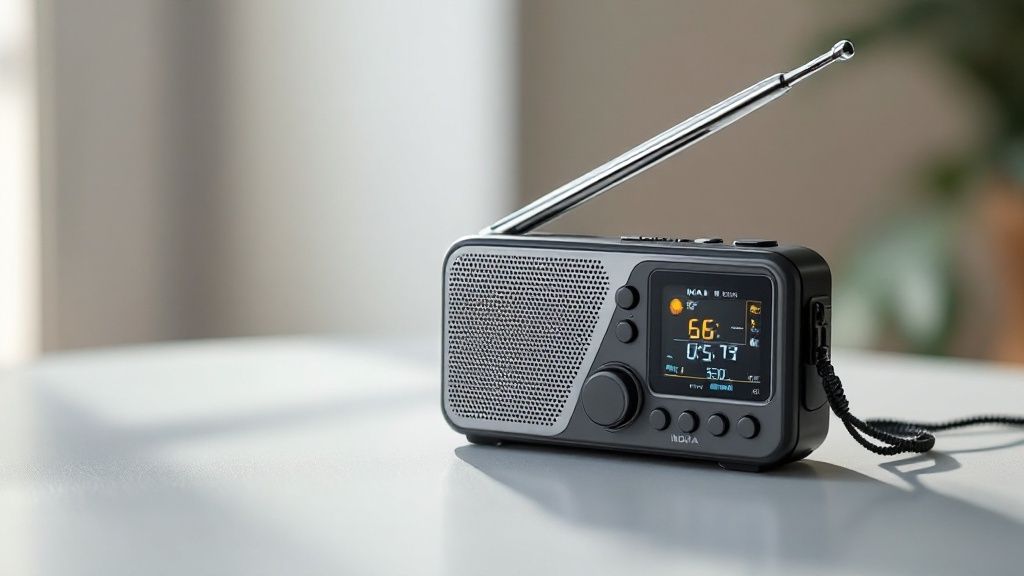
Unlike a standard AM/FM radio, a NOAA Weather Radio is specifically designed to receive NWS broadcasts, providing real-time storm track changes, tornado warnings, and vital evacuation orders. During Hurricane Michael's rapid intensification before its 2018 Panhandle landfall, these radios provided crucial, last-minute warnings that officials credit with saving lives. Similarly, during Hurricane Ian, residents in areas with no power or cell service relied on these devices for storm surge alerts and safety instructions, underscoring their importance in any comprehensive hurricane preparedness checklist for Florida.
Practical Tips for Your Weather Radio
To ensure your weather radio is a reliable source of information during a storm, follow these key tips:
- Program Your County Code: Modern NOAA radios use a system called Specific Area Message Encoding (SAME). Program the unique SAME code for your Florida county to receive alerts specific to your location, filtering out irrelevant warnings from distant areas.
- Power Redundancy is Key: Choose a model with multiple power options. The most reliable units feature a hand crank, solar panel, and battery backup. This ensures you can power the device even during a prolonged, multi-day outage. Some models, like those from Midland Radio Corporation, also include a USB port to charge a smartphone.
- Regular Testing: Don't wait for a storm to discover your radio doesn't work. Test it monthly and replace the backup batteries twice a year, typically when you change your smoke detector batteries. Ensure the antenna extends fully for optimal reception.
- Keep It Accessible: Store your weather radio with your primary emergency kit, not packed away in a hard-to-reach spot. You need to be able to grab it quickly when a storm watch or warning is issued.
4. Portable Generator with Fuel Supply
During the aftermath of a Florida hurricane, widespread and prolonged power outages are a near certainty. A portable generator becomes an indispensable lifeline, providing crucial power to keep essential appliances running, charge communication devices, and maintain a semblance of normalcy. Having a reliable generator can be the difference between enduring a difficult recovery and navigating it with safety and relative comfort, making it a cornerstone of any serious hurricane preparedness checklist for Florida.
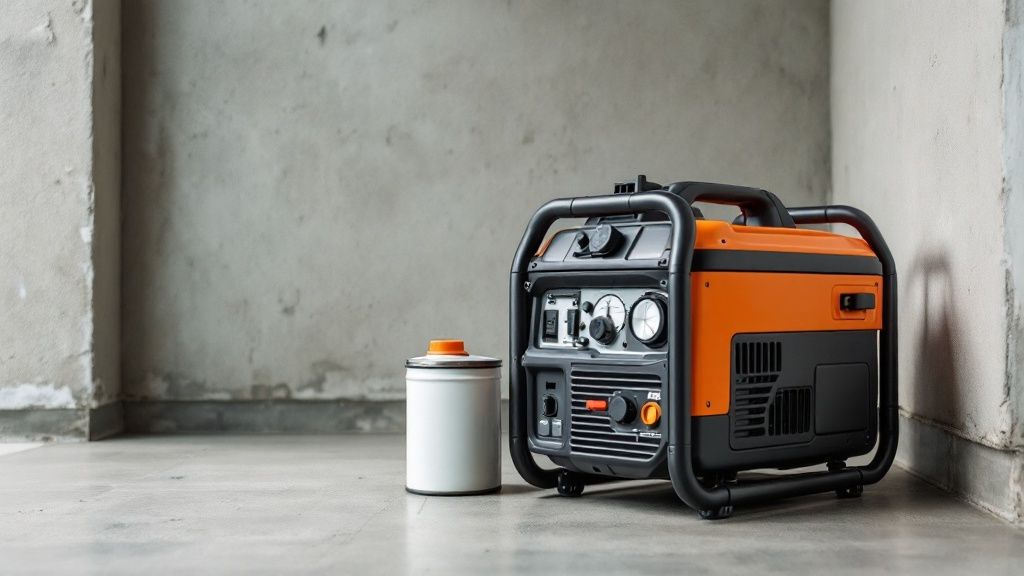
The value of this preparation was starkly evident after Hurricane Irma in 2017, when some Florida residents were without power for up to 10 days. Those with properly operated generators were able to preserve hundreds of dollars' worth of food, power medical equipment, and run fans or a small AC unit for relief from the oppressive heat. Similarly, after Hurricane Michael devastated the Panhandle, recovery efforts were significantly supported by residents who had adequate generator backup, demonstrating its critical role in post-storm resilience.
Practical Tips for Generator Safety and Use
To ensure your generator operates safely and effectively when you need it most, meticulous preparation and adherence to safety protocols are non-negotiable. Misuse can lead to carbon monoxide poisoning, fire, or electrocution.
- Operate Outdoors ONLY: Never run a generator inside a home, garage, or any enclosed or partially enclosed space. Position it at least 20 feet away from all doors, windows, and vents to prevent deadly carbon monoxide gas from entering your home.
- Secure a Fuel Supply: Store a minimum of 5 to 7 days' worth of fuel in approved safety cans. Since gasoline can degrade over time, use a fuel stabilizer to keep it fresh for longer periods. Store fuel in a well-ventilated area away from living spaces.
- Prioritize Essential Loads: A portable generator has limited output. Focus on powering only what you truly need: the refrigerator and freezer, essential medical equipment, communication devices like phones and radios, and a few lights.
- Install a Transfer Switch: For a safer and more convenient connection, have a licensed electrician install a transfer switch. This device safely connects the generator to your home's electrical panel, preventing dangerous back-feeding that can injure utility workers.
- Perform Regular Maintenance: Don't wait for a storm warning to see if your generator works. Run it for 20-30 minutes every month to keep the engine lubricated and ensure it will start when needed. Understanding the mechanics behind these essential devices can help you make informed decisions about their maintenance and use during a hurricane. Delve deeper into how a home generator works to ensure you are fully prepared.
5. First Aid Kit and Prescription Medications (30-Day Supply)
During and after a hurricane, medical services are stretched to their limits, and pharmacies may be closed for extended periods due to power outages and damaged infrastructure. A well-stocked first aid kit and a sufficient supply of essential medications are not just conveniences; they are critical components of any effective hurricane preparedness checklist for Florida. The recommendation is to have a comprehensive first aid kit for common injuries and at least a 30-day supply of all necessary prescription and over-the-counter medications for every household member.
This preparation ensures you can manage both minor injuries sustained during storm cleanup and chronic health conditions without interruption. The aftermath of Hurricane Ian served as a harsh reminder, with many Southwest Florida pharmacies remaining closed for one to two weeks, leaving residents unable to refill life-sustaining prescriptions. Similarly, during Hurricane Irma, emergency rooms were overwhelmed, not just with storm-related injuries, but with patients experiencing medical crises because they had run out of their regular medications.
Practical Tips for Medical Preparedness
To ensure your family’s health and medical needs are covered when it matters most, follow these actionable tips for organizing your supplies:
- Secure an Emergency Refill: Florida law allows for early prescription refills when a hurricane warning is issued for your county. Contact your doctor and pharmacy well in advance of a storm to request an emergency 30-day supply. Do not wait until an evacuation is ordered.
- Proper Medication Storage: Store all medications in waterproof, resealable bags or containers to protect them from floodwater and humidity. For medications that require refrigeration, have a plan that includes a small cooler and frozen gel packs.
- Compile Medical Documents: Keep copies of all prescriptions, including dosage and pharmacy information, in your waterproof document bag. Also include a list of medical conditions, allergies, and contact information for your doctors.
- Customize Your First Aid Kit: Go beyond a basic kit. Include items specific to your family's needs, such as a thermometer, a blood pressure cuff, glucose monitoring supplies, or an epinephrine auto-injector. The American Red Cross offers excellent guidelines for building a comprehensive kit.
- Consider Medical IDs: For family members with serious medical conditions or allergies, an emergency medical ID bracelet or necklace can be a lifesaver, providing crucial information to first responders if you are unable to communicate.
6. Important Documents in Waterproof Container
In the chaotic aftermath of a hurricane, having immediate access to your critical personal documents can be the difference between a swift recovery and a prolonged, frustrating ordeal. Florida's history with catastrophic storm surge and flooding, as seen during Hurricane Ian, highlights how easily vital paperwork can be destroyed. Protecting these documents in a waterproof, portable container is a non-negotiable part of any comprehensive hurricane preparedness checklist for Florida, ensuring you can prove your identity, file insurance claims, and access disaster assistance without delay.
The necessity of this step is not theoretical. After Hurricane Ian in 2022, residents with organized, protected documents were often able to process insurance claims weeks, and sometimes months, faster than those whose papers were lost to floodwaters. Similarly, the lessons from Hurricane Andrew in 1992 showed that destroyed documentation could lead to years of bureaucratic battles. Keeping your essential papers safe is a foundational step for financial and personal recovery.
Practical Tips for Protecting Documents
To safeguard your essential records and streamline your post-storm recovery process, follow these actionable strategies:
- Gather Your Essentials: Collect and place the following in a waterproof and fire-resistant bag or safe: insurance policies (home, flood, auto), proof of identity (passports, driver's licenses, birth certificates), Social Security cards, bank account records, property deeds or lease agreements, and critical medical records.
- Create Digital Backups: Scan or take clear photos of every important document and save them to multiple secure cloud services like Google Drive, Dropbox, or a password-protected USB drive. This digital redundancy is crucial if physical copies are inaccessible or destroyed.
- Include Emergency Cash: Banks and ATMs will likely be offline due to power outages. Include a stash of cash in your document container, with plenty of small bills ($1, $5, $10) for immediate post-storm purchases when credit card systems are down.
- Establish an Out-of-State Contact: Give copies of your most critical documents to a trusted friend or relative who lives outside the potential impact zone. This provides another layer of security.
- Review and Update Annually: Make it a habit to review your document kit at the start of every hurricane season (June 1st). Update insurance policies, contact information, and any other records that have changed over the past year. Ensuring your paperwork is current is just as important as protecting it; for instance, having updated documents is a key step when you need to prepare for a home inspection for insurance or sale purposes post-storm.
7. Flashlights and Battery Supply
When a hurricane hits, one of the first and most widespread impacts is a massive power outage. Reliable, non-electric lighting is not a luxury; it is a fundamental safety tool. Power can remain out for days, or as many Floridians have experienced, for weeks. Relying on flashlights and a robust supply of batteries is a critical component of any comprehensive hurricane preparedness checklist for Florida, ensuring you can safely navigate your home, perform essential tasks, and maintain a sense of normalcy after dark.
This necessity becomes clear when looking at past storms. After Hurricane Irma in 2017, nearly 7 million Floridians were left without power, some for over a week. Similarly, Hurricane Ian in 2022 left entire communities in the dark for extended periods, making portable lighting absolutely essential for basic safety and recovery efforts. Emergency responders consistently note that well-lit homes allow families to avoid trip-and-fall hazards and manage post-storm cleanup more securely.
Practical Tips for Lighting and Batteries
To ensure your home remains safely illuminated during a prolonged outage, follow these actionable tips:
- One Per Person, Plus Area Lighting: A good rule of thumb is to have at least one high-quality flashlight for every member of the household. Supplement these with larger, battery-powered lanterns to illuminate common areas like the kitchen or living room, allowing for hands-free activity.
- Store Batteries Separately: To prevent corrosion and battery drain, always store your batteries outside of the flashlights and other devices. Keep them in their original packaging in a cool, dry place until they are needed.
- Embrace Modern Technology: Consider investing in a mix of lighting solutions. LED flashlights are incredibly efficient, and rechargeable options with solar or hand-crank charging capabilities can provide a renewable source of light when battery supplies run low.
- Schedule Regular Checks: Test all your flashlights, lanterns, and headlamps monthly. Replace the batteries for your entire emergency kit at least once a year, for instance, at the start of hurricane season on June 1st.
- Include Headlamps: Headlamps are invaluable for keeping your hands free to cook, care for family members, or make repairs. This simple addition can dramatically improve your ability to function efficiently during a power outage. While you are preparing for emergency lighting, you can also explore how to brighten your home with permanent lighting solutions for everyday living.
8. Emergency Cash Supply
When a hurricane strikes Florida, widespread power outages are almost inevitable, rendering ATMs, credit card machines, and digital payment apps completely useless. In the immediate aftermath, cash becomes king. Maintaining an emergency cash supply is a non-negotiable part of any comprehensive hurricane preparedness checklist for Florida, ensuring you can purchase essential goods and services when electronic transactions are impossible. The Florida Division of Emergency Management emphasizes that for several days, or even weeks, physical currency may be the only accepted form of payment.
The necessity of cash was starkly highlighted during recent storms. After Hurricane Ian devastated Southwest Florida, countless businesses, from gas stations to grocery stores, operated on a cash-only basis for over a week while waiting for power and internet to be restored. Similarly, following Hurricane Irma, a majority of ATMs and card readers across the state were non-functional for days, leaving those without cash unable to buy critical supplies like fuel, ice, and food from the vendors who were able to open.
Practical Tips for Your Cash Reserve
To ensure your emergency cash is secure and useful when needed most, follow these actionable tips:
- Determine the Right Amount: Plan to have at least $500 to $1,000 in cash per household. This amount should be enough to cover immediate needs like fuel, food, water, lodging, or medication for several days.
- Keep Small Bills: Your emergency stash should consist primarily of small denominations. A mix of $1, $5, $10, and $20 bills is ideal. Many vendors will not be able to make change for large bills like $50s or $100s during a power outage.
- Store It Securely and Smartly: Do not keep all your cash in one place. Store it in waterproof bags or containers and divide it between multiple secure locations, such as a home safe, your "go bag," and a locked compartment in your vehicle.
- Pre-Pay When Possible: A smart financial strategy is to pay major bills like your mortgage, utilities, and insurance premiums before a storm is forecast to arrive. This reduces the immediate financial pressure post-storm and frees up your emergency cash for on-the-ground necessities.
Hurricane Preparedness Essentials Comparison
| Item | Implementation Complexity 🔄 | Resource Requirements ⚡ | Expected Outcomes 📊 | Ideal Use Cases 💡 | Key Advantages ⭐ |
|---|---|---|---|---|---|
| Emergency Water Supply (7 Gallons/Person) | Moderate – requires space & rotation | Large storage space, food-grade containers | Sustained hydration, safe drinking water | Extended outages, contaminated water supply | Life-sustaining, inexpensive, multi-scenario |
| Non-Perishable Food Supply (3-7 Days) | Moderate – bulk storage & rotation | Storage space, variety of shelf-stable foods | Maintains nutrition, energy during outages | Power outages, food supply disruption | Nutrient-dense, cost-effective, long shelf life |
| Battery-Powered or Hand Crank Weather Radio | Low – simple setup & maintenance | Battery or manual power sources | Continuous weather updates and alerts | Communication when cell networks down | Reliable info, multi-power sources, inexpensive |
| Portable Generator with Fuel Supply | High – purchase, fuel, safe operation | Generator, fuel storage, maintenance | Backup power for appliances and devices | Extended power outages, medical equipment needs | Keeps essentials running, enhances safety |
| First Aid Kit & Prescription Medications | Moderate – stocking & management | Medical supplies, prescription meds | Injury treatment, prevents medication gaps | Medical emergencies, chronic conditions | Portable, peace of mind, critical medical care |
| Important Documents in Waterproof Container | Low – organizing and updating | Waterproof/fireproof containers, digital backups | Document protection, smooth recovery processes | Post-storm recovery, insurance claims | Protects irreplaceable docs, speeds claims |
| Flashlights and Battery Supply | Low – purchase & battery management | Flashlights, batteries (various types) | Safe illumination during outages | Power outages, nighttime safety | Fire risk reduction, long battery life, versatile |
| Emergency Cash Supply | Low – securing & safe storage | Physical cash, waterproof containers | Enables purchases when electronic systems fail | Immediate post-storm expenses | Universal acceptance, flexible, critical post-storm |
Stay Safe, Orlando: Your Preparedness Journey Continues
Navigating this comprehensive hurricane preparedness checklist for Florida is a significant step toward safeguarding your home and family. We've moved beyond a simple shopping list and delved into the strategic assembly of your survival resources, room by room, phase by phase. From securing a seven-day supply of water and non-perishable food to ensuring your NOAA weather radio and flashlights have fresh batteries, each item represents a layer of security against the storm's uncertainty.
Remember, this is not just about collecting items; it's about building a system. Your waterproof container holding vital documents is your portable administrative office. The well-stocked first-aid kit, complete with a 30-day supply of prescriptions, is your home's urgent care center. And the emergency cash you've set aside is your lifeline when digital transactions fail. This checklist is your blueprint for self-reliance in the face of nature's most powerful events.
From Checklist to Lifestyle: The Ongoing Commitment
True preparedness is not a one-time task but an ongoing commitment, a habit woven into the fabric of Florida living. The real value of this checklist emerges when it becomes a living document, not one that gathers dust in a drawer.
Actionable Next Steps:
- Schedule an Annual Review: Set a calendar reminder at the start of every hurricane season (June 1st) to review your entire kit. Check expiration dates on food, water, and medications. Test batteries in your devices and run your generator for a few minutes to ensure it's operational.
- Conduct a Family Drill: Don't just make a plan; practice it. Walk through your evacuation route. Show every family member where the emergency supplies are stored and how to use key items like the hand-crank radio. This practice transforms a theoretical plan into muscle memory.
- Assess Your Home's Vulnerability: Beyond your kit, look at your property itself. Are your windows impact-rated? Do you have proper shutters? Is your landscaping trimmed to reduce the risk of flying debris? Identifying these vulnerabilities now gives you time to address them before a storm is on the horizon.
Mastering these concepts transforms anxiety into agency. Instead of reacting to a storm with panic, you can execute a well-rehearsed plan with confidence. This proactive mindset is the cornerstone of resilience, allowing you to not only endure the storm but also to recover more quickly in its aftermath. It’s about taking control where you can, so you can better manage the elements that are out of your control. Living in beautiful Central Florida, from historic neighborhoods to serene suburbs, means embracing both the sunshine and the storms. A robust preparedness plan ensures you can do so with peace of mind.
Whether you're looking for a modern home built to the latest storm-safety codes or need guidance on fortifying your historic property, our expertise extends beyond the transaction. The team at ACME REAL ESTATE FLORIDA is deeply rooted in the Orlando community and understands the unique challenges of homeownership here. Let us be your trusted partner in finding a safe, secure, and beautiful place to call home by visiting us at ACME REAL ESTATE FLORIDA.
