
Thinking about relocating to Orlando, Florida? You’re not alone. It’s one of the fastest-growing spots in the entire country, and for good reason. People are flocking here for the booming job market, especially in tech and healthcare, and for a quality of life that goes way beyond the theme parks.
Why Is Everyone Moving to Orlando?

Before you even think about boxes and moving trucks, it helps to get a feel for what’s behind Orlando's incredible growth. The city has really shaken off its "tourist-only" reputation and built a diverse, tough economy that pulls in talent from across the globe.
This shift is all thanks to a job market that's on fire. Sure, tourism is still a huge part of the picture, but Orlando is now a serious contender in industries like technology, aerospace, and medical research. This diversification offers real stability for anyone looking to build a long-term career.
A Strong, Evolving Economy
Orlando’s job scene isn’t just getting bigger; it's getting smarter. The city is becoming a genuine hub for innovation, with massive investments pouring into digital media, simulation tech, and the medical field. This creates a magnet for a wide range of professionals, from software developers to scientists, all contributing to a vibrant professional community.
This economic muscle is what’s fueling the population boom. Between July 2022 and July 2023, the Orlando-Kissimmee-Sanford metro area saw a net migration of nearly 38,000 new residents, according to the U.S. Census Bureau. Since the 2020 census, that number jumps to over 144,000 people, and it doesn't look like things are slowing down anytime soon.
It's not just about the jobs, though. The real draw is the whole package: a more affordable cost of living than other major U.S. cities, a genuinely welcoming vibe for all lifestyles, and something fun to do around every corner.
More Than a Paycheck: The Orlando Lifestyle
What really makes Orlando special is how it combines great career opportunities with an amazing quality of life. The city truly has something for everyone, which is why it appeals to such a broad mix of people.
- Diverse Communities: You’ll find top-rated schools, an abundance of parks, and well-designed suburbs perfect for raising kids.
- Vibrant Urban Life: A bustling downtown, a growing arts scene, and an incredible food landscape create a dynamic urban experience.
- Ideal for Remote Work: Great infrastructure, a lower cost of living, and no state income tax make it a smart base for anyone with a location-flexible job.
This perfect blend of work and play is why so many people are choosing to relocate to Orlando, Florida. Of course, no city is perfect. For a completely honest look, check out our guide covering the pros and cons of living in Orlando, Florida.
Ultimately, it’s this powerful combination of economic promise, affordability, and lifestyle benefits that makes Central Florida such a compelling place to call home.
To give you a quick summary, here are the key things to keep in mind.
Quick Look at Moving to Orlando
| Consideration | Key Takeaway |
|---|---|
| Job Market | Diverse and growing beyond tourism, with strong tech, healthcare, and aerospace sectors. |
| Population Growth | One of the fastest-growing metro areas in the U.S., adding over 144,000 residents since 2020. |
| Cost of Living | More affordable than many other major U.S. cities, with the added bonus of no state income tax. |
| Lifestyle | Excellent for individuals and families of all types, with abundant entertainment and recreation. |
This table should help you see at a glance why Orlando has become such a popular destination for people from all walks of life.
Budgeting for Your Move and Living Costs

Let's talk money. A smooth move is a well-funded move, and getting a handle on the financial side of your Orlando relocation is the first real step toward a stress-free transition. It's helpful to think about your budget in two distinct phases: the one-time hit of actually getting here, and the ongoing cost of living in Central Florida.
Breaking these numbers down ahead of time is the best way to avoid those gut-wrenching surprise bills. When you have a clear financial roadmap covering everything from movers to your first grocery run, you can arrive with confidence.
Accounting for Initial Relocation Expenses
First up are the logistics of the move itself. These are the upfront costs that can sneak up on you and drain your savings if you’re not paying attention. It's so much more than just the moving truck; you have to account for all the little things that come with setting up a new household from scratch.
Our advice? Fire up a spreadsheet and itemize every single potential cost you can think of. This is the only way to truly track your spending and see where you might be able to trim the fat.
Here are the big-ticket items you'll want to budget for:
- Moving Company or Truck Rental: This is almost always the biggest single expense. A full-service move for a 3-bedroom home can easily run from $2,500 to $7,000, sometimes more, depending on how far you're coming from. A DIY truck rental is cheaper, but don't underestimate the sweat equity involved.
- Security Deposits: If you're renting, prepare to pay the first month's rent plus a security deposit of the same amount. For an apartment that costs $2,000/month, that means you need $4,000 in cash, ready to go.
- Utility Connection Fees: Getting the lights on isn't always free. Gas, electric, water, and internet providers usually have activation or transfer fees, which can add another $50 to $200 per service to your startup costs.
- Initial Household Stock-Up: Think about that first trip to Target or Publix. You'll need everything from cleaning supplies and pantry staples to maybe some new furniture to fit the new space. It adds up.
Pro Tip: Never, ever go with the first moving company you talk to. Get at least three quotes. The prices and included services can be wildly different, and comparing offers is the only way to know you're getting a fair deal.
Understanding the Ongoing Cost of Living in Orlando
Once you’ve unpacked a few boxes, your financial focus will shift to the day-to-day, recurring expenses. Frankly, one of the biggest reasons people relocate to Orlando, Florida, is that it’s still relatively affordable compared to other major US cities, especially other big metros in Florida.
This affordability is what’s driving so much of the migration within the state. In fact, a 2024 analysis of moving trends shows Orlando as a top destination for Floridians moving from other parts of the state. The most common move we see is from Miami to Orlando, and it makes perfect sense—home prices here are about 42% lower. With new infrastructure like the high-speed rail connecting the cities, Orlando is becoming an even more attractive hub for everyone from young professionals to families at major companies like Lockheed Martin and Siemens. You can dig into more Florida moving trends to see the full picture.
So, what can you actually expect to spend each month?
Housing Costs
No surprise here: housing will be your largest monthly expense. The good news is that the Orlando real estate market has something for everyone, whether you want a downtown high-rise or a suburban home with a yard.
- Median Rent: For a decent one or two-bedroom apartment in a good neighborhood, you should probably budget for around $1,800 to $2,200 per month.
- Median Home Price: If you’re in a position to buy, the median home price across the Orlando metro area is hovering around $380,000. Of course, this can swing dramatically depending on the specific neighborhood.
Everyday Expenses
Beyond your rent or mortgage, the rest of your daily living costs in Orlando are pretty manageable.
| Expense Category | Estimated Monthly Cost (for an individual) |
|---|---|
| Groceries | $350 – $450 |
| Utilities (Electric, Water, Internet) | $200 – $300 |
| Transportation (Gas, Tolls, Insurance) | $300 – $500 |
| Healthcare | Varies widely based on coverage |
And don't forget one of Florida's biggest perks: there is no state income tax. For many people, this translates into a significant boost in take-home pay compared to other states. By planning for both your upfront moving costs and your ongoing budget, you’ll be in a fantastic position to actually get out and enjoy your new life in Orlando.
Finding Your Perfect Orlando Neighborhood
Deciding where to plant your roots in Orlando is arguably the biggest piece of the relocation puzzle. This isn't just about finding a house with the right number of bedrooms; it's about finding a corner of the city that truly feels like home. Orlando is a vast mosaic of unique communities, and what's perfect for a young professional is completely different from what a growing family might need.
The trick is to first figure out your non-negotiables. Are you picturing quiet, tree-canopied streets with top-rated schools? Or do you get energized by the idea of a walkable urban neighborhood where brunch spots and indie boutiques are right outside your door? Answering these questions upfront will save you countless hours and a lot of headaches.
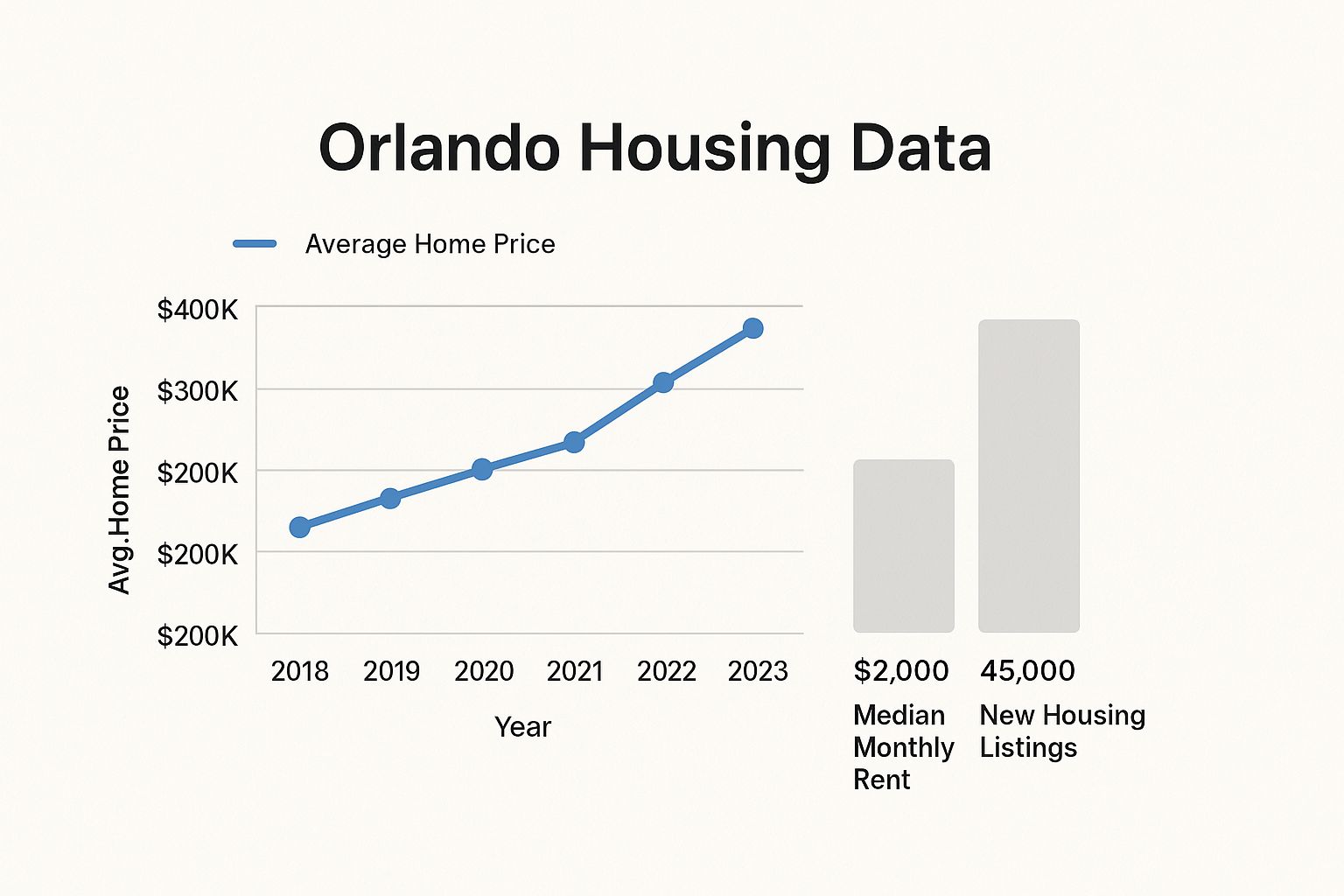
This snapshot of Orlando's housing market shows what you can expect. While prices have certainly climbed, it's still an active market with plenty of options for newcomers, whether you're looking to buy or rent.
The Urban Core and Historic Charm
If you thrive on being in the center of the action, Downtown Orlando is the place to be. It’s a magnet for young professionals and anyone who loves the buzz of city life. You’ll find modern high-rise condos with incredible views, a vibrant nightlife, and major cultural hubs like the Dr. Phillips Center for the Performing Arts.
Just next door, you'll find Thornton Park. It’s a completely different world. Famous for its beautiful, oak-lined brick streets and historic bungalows, this area has a much more relaxed, almost bohemian feel. It’s one of Orlando’s most walkable spots, filled with independent shops, cozy wine bars, and cafes that give it a genuine tight-knit community atmosphere, all while being a short stroll from downtown.
Family-Focused Suburbs
For families making the move, great schools and a safe, welcoming environment are often top of the list. Winter Park is a classic choice, consistently ranked among the most desirable suburbs. It boasts a picturesque downtown on Park Avenue, stunning parks and lakes, and A-rated schools. The vibe is established and upscale, with gorgeous historic homes.
If modern living is more your style, Lake Nona is a must-see. This master-planned community was literally built with health, wellness, and technology in mind. It's known for its brand-new homes, innovative schools, and perks like community gardens and included high-speed internet. Its proximity to "Medical City"—a massive cluster of hospitals and research centers—makes it especially popular with healthcare professionals. To get a better sense of your options, check out our guide to the best neighborhoods in Orlando for families.
A pro tip from our experience: The best way to get a feel for a neighborhood is to visit on a Saturday morning. Grab a coffee from a local shop, walk around, and check out a park. You'll learn more about the area's real personality in a few hours than you ever could from an online listing.
Up-and-Coming and Trendy Hotspots
Looking for a place with a bit more edge and a unique identity? The Milk District and the Audubon Park Garden District should be on your list. These areas are fiercely independent and celebrate all things local, from craft breweries to community markets.
- The Milk District: Named for the iconic T.G. Lee Dairy plant, this neighborhood has a gritty, creative energy. It's the go-to spot for live music venues, eclectic vintage shops, and a seriously diverse food scene.
- Audubon Park Garden District: This eco-friendly community is all about the "local first" mindset. It's home to a fantastic weekly farmers market and the famous East End Market, a food hall that’s a playground for local chefs and artisans.
Orlando Neighborhood Comparison
To make things a little easier, we've put together a quick comparison of some of the city's most popular areas. Think of this as a starting point to help you narrow down your search and find the community that best fits your lifestyle.
| Neighborhood | Best For | Average Home Price | Key Features |
|---|---|---|---|
| Downtown Orlando | Young Professionals & City Lovers | $350,000+ | High-rise living, nightlife, walkability, arts venues |
| Winter Park | Established Professionals & Families | $700,000+ | Top-rated schools, upscale boutiques, historic homes, chain of lakes |
| Lake Nona | Healthcare & Tech Professionals | $600,000+ | New construction, "Medical City," wellness focus, modern amenities |
| Thornton Park | Creative Professionals & Couples | $550,000+ | Historic bungalows, indie shops & dining, charming brick streets |
Ultimately, there's no substitute for hitting the road. Spend a weekend just driving through these different areas. You'll quickly get a gut feeling for which one clicks. What looks perfect online can feel totally different in person, and discovering that ideal spot is one of the most exciting parts of moving to Orlando.
Making Your Move: Securing Housing and a Job in Orlando
Alright, let's get down to the two biggest pieces of any relocation puzzle: finding a place to live and landing a great job. In a city as dynamic as Orlando, you have to be strategic, especially if you're trying to line everything up from another state.
Think of it this way: you’re not just looking for a house, you’re searching for your home base. And you’re not just after a paycheck; you're building the next chapter of your career. Here’s how you can tackle both Orlando's housing and job markets like a seasoned pro.
Mastering the Orlando Housing Search
Whether you're looking to buy or rent, you need to understand one thing about the Orlando real estate market: it moves fast. The city is a magnet for new residents, which means competition is real, but so are the opportunities if you know how to approach it.
Florida's growth is no secret. The state's population grew by 1.6% in 2023, according to U.S. Census Bureau estimates, which translates to over 365,000 new people calling it home. A huge number of them landed right here in Central Florida, drawn by the booming economy and incredible lifestyle.
This constant influx has a direct impact on your housing search. To get a leg up, you need a solid game plan.
- If you're renting: Plan to start your serious search about 60-90 days before you want to move in. Most landlords and apartment communities won't hold a place for you any longer than that.
- If you're buying: This is non-negotiable—get pre-approved for a mortgage before you even start looking at listings. In a market this competitive, sellers won't take you seriously without it. A pre-approval letter proves you’re a qualified buyer and gives your offer immediate credibility.
House Hunting From Out of State
Looking for a home from hundreds of miles away is tough, but it's more doable today than ever before. Your single most important asset in this process will be a fantastic local real estate agent. They're your eyes and ears on the ground.
A great agent can do virtual walk-throughs, check out a neighborhood for you, and give you the honest truth about a property that photos just can't convey. Their local insight is absolutely priceless when you can't be there yourself.
Remember to use resources that follow Federal Fair Housing guidelines. This ensures everyone has an equal opportunity to find a home and helps maintain the welcoming community that makes Orlando special.
Tapping Into Orlando’s Thriving Job Market
While you’re figuring out your living situation, it’s time to get serious about your career. Orlando's economy is so much more than just tourism—it's a genuine powerhouse in several key sectors that are driving the future.
Knowing where the opportunities are will help you focus your search and connect with the right people.
Orlando's Key Industries Include:
- Tech & Simulation: Orlando is a global hub for modeling and simulation, serving major military and private-sector clients.
- Healthcare & Life Sciences: The Lake Nona "Medical City" is a massive cluster of world-class hospitals, research centers, and biomedical companies.
- Aerospace & Aviation: Thanks to its proximity to the Space Coast, the region is a major player in aerospace, defense, and aviation tech.
- Hospitality & Tourism: Of course, the foundation remains incredibly strong. The world’s top theme parks, hotels, and entertainment venues are always looking for talent.
When you're entering a new job market, your resume is your first handshake with a potential employer. It's worth taking the time to create a powerful CV that really tells your professional story.
Here’s a pro tip: start networking before you even pack a single box. Hop on LinkedIn and connect with people in your field who are based in Orlando. Join local industry groups online. This early groundwork can open doors and lead to incredible opportunities, making your professional transition just as smooth as your move.
Making Your Move and Settling In
Alright, you’ve done the hard work—you found a great neighborhood, signed on a new home, and maybe even have a job lined up. Now for the really fun part: the actual move. This is where all that planning shifts from spreadsheets and big ideas to a very real checklist of tasks to get you and your stuff from point A to point B.
The goal here is a transition that’s as seamless as possible. A little organization now will save you a massive headache later. From picking the right movers to getting your Florida driver's license, every step from here on out is about laying the foundation for your new life in Central Florida.
Organizing the Logistics of Your Move
Let’s be honest, the physical move can be the most stressful piece of the puzzle. Your first big decision is how you're going to get everything here. Professional movers can be an absolute lifesaver, but you have to do your homework. We always recommend getting quotes from at least three different licensed and insured companies. Don't just look at the price—read their reviews and ask for references.
Of course, you could go the DIY route with a rental truck. It can definitely save you a lot of money, but you need to be realistic about the physical effort and time it takes. Whatever you decide, start the process early. If you're moving during the peak summer season, those moving company schedules and rental trucks get booked up fast.
And what about your four-legged family members? Moving can be stressful for them, too. Finding reliable domestic pet moving services is a smart move, especially for a long-distance relocation. These pros specialize in making the journey safe and comfortable.
Here are a few other must-do items for your pre-move checklist:
- Forward Your Mail: Head to the USPS website about two weeks before you move. It’s a simple online form that ensures you don’t miss any bills or important documents in the chaos.
- Set Up Utilities: Get in touch with your new utility providers for electricity (likely OUC or Duke Energy), water, and internet. Schedule them to be turned on the day you arrive.
- Update Subscriptions: Don't forget about Amazon, your favorite meal kit service, or any other online accounts. Change that shipping address now!
Becoming an Official Florida Resident
Once the last box is through the door, it’s time to make your residency official. The state has a few key requirements you’ll want to take care of within the first month.
Your first stop will almost certainly be the Florida Department of Highway Safety and Motor Vehicles (FLHSMV). You'll need to swap your old driver's license for a Florida one and register your vehicle. Save yourself a second trip by gathering all your documents beforehand—you’ll need proof of identity, your Social Security number, and two proofs of your new Florida address (like a lease or utility bill).
Pro Tip: Appointments at the FLHSMV are a game-changer and can save you hours of waiting. Check your local county tax collector's website to schedule one. This is one of the best pieces of advice we can give anyone new to the area.
While you're in official-business mode, go ahead and update your voter registration. It's a quick process you can often handle online or even while you're at the FLHSMV. Getting this done early means you'll be ready to participate in local elections and have a say in your new community right away.
Embracing Life in Central Florida
With the paperwork handled, you can finally start to sink into what it’s really like to live here. One of the first things you'll want to get a handle on is our road system. Central Florida is crisscrossed with toll roads like the 408, 417, and the Florida Turnpike. Do yourself a massive favor and get a SunPass or E-PASS transponder. It saves you time, money, and the hassle of fumbling for change.
Next up is getting acquainted with Florida's famous climate. Hurricane season runs from June through November, and being prepared is just a normal part of life here. It's not something to be afraid of, just something to be ready for. As you unpack, it’s the perfect time to put together a basic emergency kit. To get started, you can check out our complete hurricane preparedness checklist for Florida.
Finally, get out and explore beyond the theme parks. Discover a local farmers' market—the one in Winter Park on Saturdays is fantastic—or find a community event through your city's website. This is how you'll start to feel less like a transplant and more like a true Orlando local.
Answering Your Lingering Questions About Moving to Orlando
Okay, you've done the research, crunched the numbers, and you're this close to packing the boxes. But even the best-laid plans come with a few "what if" questions. It's totally normal.
Let's tackle some of the most common things people wonder about before they make the move to Orlando. Think of this as the practical, real-world advice you'd get from a friend who's lived here for years.
What’s the Weather Really Like?
Everyone knows about the sunshine, but living here is a bit more nuanced. Orlando basically has two seasons: a hot, humid summer and a mild, gorgeous winter.
From about May through September, you can count on daily highs in the low to mid-90s. The humidity is no joke—it makes it feel even hotter. You also get a near-daily, brief but intense afternoon thunderstorm. Seriously, just keep an umbrella in your car. The upside? The rest of the year is spectacular, with highs in the 70s, low humidity, and endless opportunities to be outside.
How Bad Is the Traffic, Honestly?
We won't sugarcoat it: the traffic can be rough, especially around rush hour. Interstate 4 (I-4) is the main vein of the city, and it lives up to its congested reputation, particularly in the tourist corridors.
But once you live here, you learn the secrets. Many locals swear by the toll road network—like the 408 and 417—which can shave a ton of time off your commute. You'll want to budget for a SunPass and get friendly with navigation apps like Waze. If you can, avoiding the roads between 7-9 AM and 4-6 PM will make your life much easier.
Pro Tip: Your commute is one of the biggest factors in your quality of life here. When you're looking at neighborhoods, map the drive to your job during peak hours. It could be the deciding factor between two great options.
What Are the Public Schools Like?
This is a huge question for families, and the answer is that school quality can vary quite a bit from one area to another. Orange County Public Schools (OCPS) is the main district, and it's massive, with a wide range of schools.
Certain areas have a strong reputation for their top-tier schools. Neighborhoods like Winter Park, Lake Nona, and Oviedo are consistently sought after for their A-rated public schools. A great starting point is the Florida Department of Education's website, which has detailed performance data. Don't forget to look into the magnet programs and charter schools, too; they offer fantastic specialized options.
Is There Anything to Do Besides Theme Parks?
Absolutely! While having Disney World and Universal in your backyard is amazing, most residents rarely go. The real Orlando is packed with culture, incredible food, and beautiful nature.
- Getting Outside: The city is famous for its chain of lakes, perfect for boating and kayaking. Wekiwa Springs State Park is a local obsession for swimming in the cool, crystal-clear water and hiking through lush trails.
- Arts & Culture: You can catch a Broadway show at the stunning Dr. Phillips Center for the Performing Arts, browse the Orlando Museum of Art, or check out the ever-changing street art in the Mills 50 district.
- Food Scene: Orlando is a genuine foodie town. From the high-end restaurants along "Restaurant Row" in Dr. Phillips to hip food halls like East End Market, there’s always something new and delicious to try.
Living in Orlando is so much more than its tourist persona. Getting answers to these practical questions helps you see what daily life will actually be like once you get here.
Ready to stop dreaming and start living your best Florida life? The team at ACME REAL ESTATE FLORIDA knows this city inside and out—from the best school zones to the neighborhoods with the easiest commutes. We're here to make your relocation smooth, successful, and genuinely fun. Let's find you an amazing place to call home. Learn more and get in touch at https://www.acmeflorida.com.
