
So you’ve found the perfect property, your offer has been accepted, and the excitement is building. What happens next? You enter what might be the single most important phase of the entire home-buying journey: the due diligence period.
This is a specific timeframe, agreed upon in your purchase contract, that gives you, the buyer, a chance to thoroughly investigate the property. Think of it as your official "look before you leap" window. It’s your opportunity to conduct inspections and do your homework to make absolutely certain you're making a smart investment.
If you happen to uncover any issues during this time, you typically have the power to renegotiate the terms of the deal or even walk away completely, usually while getting your earnest money deposit back.
Decoding the Due Diligence Period

The due diligence period is your safety net. It’s an exclusive window of time granted to you after the seller accepts your offer but before the deal is legally binding and finalized. This is your chance to verify all the seller's claims and uncover any potential problems that weren't obvious during the initial walkthrough.
Essentially, you're performing a comprehensive investigation to make sure the property is everything you think it is. Now is the time to bring in professionals, ask the tough questions, and dive deep into the details. If everything checks out, you can move toward closing with total confidence.
Why This Period Is Your Most Powerful Tool
During due diligence, the power dynamic shifts almost entirely to you. You get to explore every nook and cranny of the property without the risk of losing your deposit if you find a deal-breaker. This investigative phase gives you the leverage to:
- Find hidden issues: Uncover potential problems with the property's structure, major systems, or legal status that aren't visible at first glance.
- Negotiate from a position of strength: If an inspection reveals the roof needs work, for instance, you can request the seller fix it, ask for a price reduction, or negotiate for credits at closing.
- Walk away if necessary: If the problems are just too big or the seller isn’t willing to negotiate a fair solution, you have the contractual right to terminate the deal and get your earnest money back.
This period is your one real shot to make sure there are no nasty surprises waiting for you after you get the keys. A thorough investigation during due diligence is what separates a smart purchase from a costly mistake.
Ultimately, understanding what the due diligence period is and how to use it effectively is a game-changer for any buyer. Staying organized is absolutely key, which is why a comprehensive resource like this home buying checklist template can be invaluable for tracking your progress and ensuring no stone is left unturned.
Unpacking the Purpose of Due Diligence
At its very core, the due diligence period is all about one thing: risk mitigation. It's your one shot to peel back the curtain, look past the fresh paint and staging, and discover the reality of the property you're about to buy. This isn't just about avoiding a bad property; it's about making sure you know the true value and condition of your investment.
Think of it as a background check for a house. You get a limited window to verify every single detail that matters, from the foundation's integrity to the financial health of the homeowner’s association. Without this critical step, you're essentially making a massive financial decision based on incomplete information.
From Discovery to Decision
The whole point is to unearth potential risks before they become your problem. For instance, a home inspector might find a crack in the foundation that could cost thousands of dollars to fix—a bill you would’ve inherited without a proper look. A title search could just as easily reveal an unpaid lien on the property, which would become your responsibility the second you close.
This period gives you the power to make a genuinely informed decision. It’s about digging up any hidden liabilities that could turn your dream home into a financial nightmare. Getting familiar with fundamental risk management principles can give you a great framework for how to approach this.
Due diligence is what transforms a hopeful offer into a confident investment. It’s the process of replacing assumptions with facts, ensuring the property aligns perfectly with your financial goals and expectations.
When you use this time wisely, you gain the clarity needed to confirm the property's condition and value. It ensures no nasty, expensive surprises are waiting for you after you get the keys. For any savvy buyer, skipping or rushing this phase is a gamble you just can't afford to take.
A Practical Checklist for Due Diligence
So, you're in the due diligence period. It can feel like you're about to dive into a massive, complicated investigation, but it doesn't have to be overwhelming. The best way to tackle it is with a solid checklist. This simple roadmap breaks down exactly what you and your team will be looking at.
Think of yourself as assembling an investigative team. You'll have a certified home inspector, a real estate attorney or title company, and perhaps even other specialists. Each person has a specific job, and together, they'll uncover every important detail about the property.
This isn't just one big task; it's a series of focused, coordinated examinations.
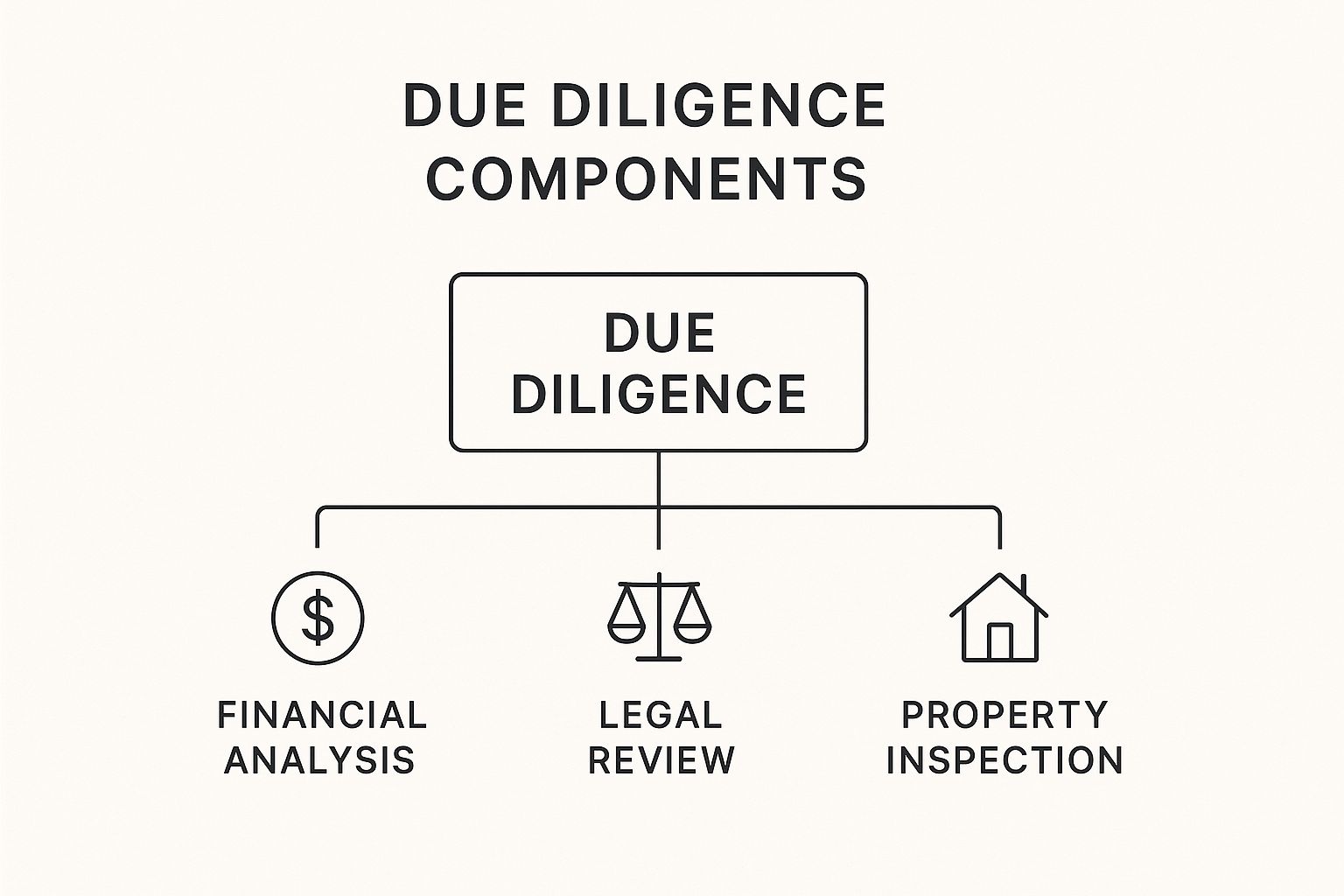
As you can see, due diligence branches out into several distinct but connected areas of investigation. Let's walk through them.
Hitting the Ground Running: Property and Physical Inspections
This is where you get your hands dirty—or rather, your inspector does. This phase is all about the physical condition of the property. A licensed home inspector is your most valuable player here, performing a top-to-bottom review of the home.
To get a feel for what the pros are looking for, you can check out a detailed https://acmeflorida.com/florida-home-inspection-checklist/.
A thorough physical review usually includes:
- A General Home Inspection: This is a comprehensive review of the home's structure, roof, plumbing, electrical systems, and HVAC.
- Pest and Termite Inspection: A specialist will hunt for any wood-destroying organisms that could cause serious, hidden damage.
- Radon and Mold Testing: These environmental checks are crucial for ensuring the air quality inside the home is safe for you and your family.
- Well and Septic Inspection: If the property isn't on city water or sewer, these tests are non-negotiable. They confirm the water is safe to drink and the septic system is functioning properly.
Behind the Scenes: Legal and Documentary Review
While your inspector is climbing on the roof, your real estate attorney or title agent is digging through paperwork. This part of the process ensures there are no legal surprises—like hidden claims or restrictions—that could affect your ownership rights down the road.
This legal review is all about confirming a "clean title." This term means making sure the seller has the undisputed right to sell the property and that there are no liens or other legal claims attached to it.
They’ll conduct a title search, review property surveys to confirm boundary lines, and check local zoning laws to make sure you can actually use the property the way you intend to. And if there’s a Homeowner's Association (HOA), they’ll pore over those documents to understand the rules, fees, and financial health of the community.
The Bottom Line: Financial Verification
Finally, it's time to make sure the numbers add up. This is where you verify property tax records, look at past utility bills, and, for an investment property, scrutinize the rental income history.
When you're dealing with an income-producing asset, confirming the seller's financial claims is absolutely essential. For anyone needing to dig into financial records, mastering bank statement verification is a game-changing skill. This final check confirms the property's real-world operating costs and helps you project its true profitability.
To give you a clearer picture, here’s a quick summary of what these investigations look like in practice.
Common Due Diligence Investigations at a Glance
This table breaks down the essential checks performed during the due diligence period.
| Type of Due Diligence | What It Investigates | Primary Goal |
|---|---|---|
| Physical Inspection | The home’s structure, roof, major systems (HVAC, plumbing, electrical), pests, and environmental hazards like radon. | To uncover any physical defects, safety issues, or needed repairs in the property. |
| Legal & Title Review | Property title, liens, easements, zoning laws, property surveys, and HOA/condo association documents. | To ensure the seller has the legal right to sell and there are no hidden claims. |
| Financial Verification | Property taxes, utility bills, insurance costs, and (for investment properties) rental income and operating expenses. | To confirm the property's ongoing costs and financial viability. |
Each of these pillars—physical, legal, and financial—is critical to building a complete understanding of the property you’re about to buy.
How Much Time Do You Really Need?

This is one of the biggest questions buyers ask: how long should the due diligence period actually be? The honest answer is that there’s no single correct number. It’s all about what you and the seller agree to in the purchase contract. Finding that sweet spot is crucial.
For a standard residential home purchase, you’re usually looking at a 7 to 14 day window. That’s typically enough breathing room to get a general home inspection, a pest inspection, and maybe a few other basic checks squared away. But it's not a one-size-fits-all situation; the timeline really needs to match the property itself.
Factors Influencing Your Timeline
Several things can stretch or shrink your due diligence period. The age and condition of the property are huge factors. An older home that might have deferred maintenance is going to demand a more thorough look than a brand-new build.
What’s happening in the local market plays a big role, too. In a hot seller's market, you might feel pressure to offer a shorter period to make your offer more competitive. On the flip side, in a buyer's market, you’ll likely have more power to negotiate for extra time.
And, of course, the complexity of the deal itself is a major driver. A straightforward home purchase is one thing, but bigger transactions are a whole different ball game.
When you're dealing with more complex commercial properties or business acquisitions, the due diligence period often expands to 30 to 90 days. That longer timeframe is essential for digging into financial audits, legal reviews, and deep operational assessments.
The sheer size of the global due diligence services market—valued at around USD 15.2 billion in 2022—highlights just how critical this phase is, especially in high-stakes mergers and acquisitions. That market is projected to grow significantly as M&A activity continues. You can explore more data on the global due diligence services market to get a sense of its growing importance.
How Due Diligence Is Changing Today
The traditional due diligence checklist is getting a serious update. What used to be almost entirely about finding leaky roofs and making sure the property title was clean has expanded into something much broader to match today's world. So, what is the due diligence period now? Think of it less as a simple inspection and more as a forward-looking risk assessment.
This change is most obvious in larger commercial deals. Buyers are digging much deeper than the immediate physical condition or the current balance sheet. They're trying to figure out a property or company’s long-term sustainability and ethical framework, adding a whole new, crucial layer to the process.
The Rise of ESG Considerations
At the center of this shift are Environmental, Social, and Governance (ESG) factors. These aren't just corporate buzzwords anymore; they’ve become a standard part of many sophisticated investigations. It’s now routine for smart investors and buyers to look into a target's:
- Environmental Impact: This goes beyond basic compliance. It means checking environmental regulations, looking at climate-related risks like flood zone mapping, and sizing up a building’s energy efficiency.
- Social Responsibility: Here, buyers are looking at how a company treats its employees, its role in the local community, and its overall social footprint.
- Corporate Governance: This is all about pulling back the curtain on a company's leadership, internal controls, and ethical business practices to make sure everything is transparent and above board.
This deeper dive shows a major shift in what investors care about. A recent global report from KPMG found that over 70% of dealmakers now consider ESG due diligence essential to their transactions. They often integrate it directly into their financial analysis to reduce risks and support better long-term performance. You can discover more insights on the global ESG due diligence study to see just how important this has become.
In short, today's due diligence asks not just "Is this a good investment now?" but "Is this a sustainable and responsible investment for the future?"
These modern factors have a direct line to an asset's value, risk profile, and sustainability. By baking them into the process, savvy buyers get a much clearer, more honest picture of what they’re truly buying into.
What to Do with Your Inspection Findings
So, the inspection report is in your hands. Finding a problem isn't a dead end—far from it. This is exactly why you have a due diligence period! It’s all about gathering information, which gives you leverage and clarity for what comes next. This is the moment when all your careful preparation for the home inspection really pays off, turning what could be a headache into a real opportunity to negotiate.
Once your inspector walks you through their detailed report, you've got three main paths you can take. Your final decision will really depend on how serious the issues are, how willing the seller is to negotiate, and your own comfort level. It’s a strategic choice, and the goal is to protect your investment.
Your Three Strategic Options
With the inspection findings in hand, the ball is officially in your court. Here’s a breakdown of your moves:
- Move Forward As-Is: If the report only turned up minor issues, or if you feel the asking price already reflects the home's current condition, you can accept the findings and continue moving toward closing.
- Renegotiate the Terms: This is the path most buyers take. You can use the report as a tool to ask the seller to make specific repairs before closing. Another common route is to ask for a price reduction or a credit at closing that you can use to handle the repairs yourself.
- Terminate the Contract: If the problems are just too big, too expensive, or you and the seller can't find a fair compromise, your due diligence contingency is your escape hatch. It gives you the right to walk away from the deal and, crucially, get your earnest money back.
Using your inspection report wisely is the key to turning a potential setback into a better deal. Don't be shy about asking for what's fair—this is your best and probably last chance to do it.
A Few Common Questions About Due Diligence
When you’re in the thick of a real estate deal, a few questions about the due diligence period almost always pop up. Getting clear on the answers ahead of time means you can move forward with confidence, knowing you haven't missed a single detail.
Can a Seller Just Say "No" to Repairs?
Yes, they can. A seller has no obligation to fix anything that comes up during the inspection. This is exactly why the due diligence period is so crucial—it gives you a contractual out. If they refuse and you're not comfortable with the property's condition, you can walk away. As long as you terminate the agreement within the timeframe specified in your contract, you'll almost always get your earnest money back.
What's the Difference Between Due Diligence and an Appraisal?
It's easy to get these two mixed up, but they serve totally different purposes. Think of due diligence as your personal investigation. It’s a broad, deep dive into the home’s overall health, legal standing, and anything else you need to know for your own peace of mind.
An appraisal, on the other hand, is primarily for the lender's benefit. A licensed appraiser determines the property's market value to make sure it's a sound investment for the bank and supports the loan amount. It’s a single, focused task within the larger home buying process.
What Happens When the Clock Runs Out?
Once your due diligence period expires, your inspection contingencies are typically removed. This is a big step! It means you're officially accepting the property in its current condition and are fully committed to moving forward. If you try to back out after this point for reasons that would have been covered by your inspection, you'll likely lose your earnest money deposit. It's the green light the seller has been waiting for, signaling you're ready to head to the closing table.
Navigating the real estate market takes local know-how and a dedicated team. ACME REAL ESTATE FLORIDA is here to guide you through every single step, from the first offer to closing day. Let's go find you something amazing. https://www.acmeflorida.com
