
Down payment assistance programs are a form of financial aid designed to help homebuyers cover the significant upfront costs of purchasing a home. The best way to think about it is like a scholarship for homebuying. It’s designed to bridge the gap between what you’ve saved and the keys to your new front door, making the dream of owning a home feel much more real.
How Down Payment Assistance Unlocks Your Dream of Homeownership
For many aspiring homeowners, the biggest hurdle isn't making the monthly mortgage payment—it's saving for a substantial down payment. It can feel like an impossible mountain to climb, especially for those without access to generational wealth. Down payment assistance (DPA) can be your guide to the summit, providing the critical funds you need to finally make it happen.
These programs are typically offered by federal, state, and local government agencies, and sometimes by non-profit organizations. Their main goal is simple: make homeownership more accessible to a wider range of people, especially first-time buyers or those with low-to-moderate incomes. By reducing that initial financial burden, DPA empowers individuals and families who can comfortably handle monthly payments but are struggling to meet that first big savings goal.
Breaking Down the Basics of DPA
At its core, DPA is there to help with two major upfront expenses: the down payment itself and the various closing costs for home buyers. These programs aren't a one-size-fits-all solution; they come in a few different forms.
The two most common types you’ll run into are:
- Grants: This is the most advantageous type. A grant is essentially a financial gift that you do not have to repay, as long as you meet certain conditions (like living in the home for a specified number of years).
- Forgivable Loans: This is a loan with a disappearing balance. You receive a lump sum for your down payment, and for every year you live in the home, a portion of that loan is forgiven. After a set time—often five to ten years—the entire loan may be completely forgiven.
These programs are more common than most people realize. According to recent industry data, there are thousands of homebuyer assistance programs available across the U.S., with new ones being added regularly. The average amount of assistance can be significant, often providing tens of thousands of dollars, which can dramatically lower the barrier to entry for countless buyers.
These assistance programs are a critical tool for building financial security. They directly address a primary obstacle to homeownership and help create a more equitable path for everyone who wants to own their own home.
To get the full picture of how these programs work, it can be helpful to also understand the bigger strategies for maximizing grant funding for housing initiatives. With this foundation, you can feel confident that the biggest challenge in homebuying is one you can absolutely conquer.
Breaking Down the Different Types of DPA
Not all down payment assistance is created equal, and understanding the nuances between programs is key to shaping your financial future. Think of down payment assistance (DPA) as a toolkit—each tool is designed for a specific job. Picking the right one makes building your dream of homeownership a whole lot easier.
Let's break down the most common types you'll run into.
The image below lays out the primary paths to unlocking homeownership through assistance, highlighting the main categories you can choose from.

As you can see, while there are multiple routes, they generally fall under a few core structures like grants and different types of loans. This gives you a clear starting point for your search.
Grants: The Ultimate Financial Gift
First up is the gold standard of DPA: grants. A grant is a financial gift toward buying your home that you do not have to repay, as long as you meet certain conditions. It's the most straightforward and desirable help you can get.
Usually, the main requirement is that you must live in the home for a specific number of years, often around five years. This helps ensure the program supports stable, long-term homeowners in the community. If you can meet that simple residency requirement, the money is yours, free and clear.
Forgivable Loans: A Loan That Disappears Over Time
Next on the list are forgivable loans. These operate on a vesting schedule, similar to how company stock options might work. You get a loan to cover your down payment, but you don't make monthly payments on it. Instead, the loan balance shrinks each year you live in the home.
For example, a program might offer a $15,000 forgivable loan on a five-year term. For every year you stay put, $3,000 of that loan is forgiven. After five years of residency, the entire loan is completely wiped away. It essentially becomes a grant after the fact, rewarding your commitment to the property. Just be aware, if you sell the home before the term is up, you will likely have to repay the remaining balance.
Deferred Payment Loans: The Silent Partner
A deferred payment loan acts like a silent financial partner. You receive a second mortgage to cover your down payment costs, but you aren’t required to make any payments on it until a specific event happens down the road. This loan sits quietly in the background, and in many cases, it doesn’t even accrue interest.
So when do you pay it back? Repayment is typically "deferred" until one of these things happens:
- You sell the home.
- You refinance your primary mortgage.
- You pay off your primary mortgage completely.
When that day comes, you pay back the original loan amount, often with the equity you’ve built in your home. It's a fantastic way to get into a home now without the pressure of an extra monthly bill.
Low-Interest Loans: A Manageable Second Mortgage
Finally, we have low-interest repayment loans. This type of DPA is a second mortgage that comes with its own monthly payment. The key difference is that the interest rate is significantly lower than your main home loan—sometimes it's even 0%.
While this means you'll have two monthly housing payments (one for your primary mortgage and a smaller one for the DPA loan), it's often a very manageable amount. It gets you the upfront cash you need while spreading the repayment over a long term, making it another accessible path for many homebuyers.
While this guide focuses on assistance for your primary residence, those looking to build a real estate portfolio might want to explore other financing avenues, like rental property financing options.
Comparing Your Down Payment Assistance Options
It can be a lot to take in, so here’s a quick table to help you compare the most common DPA types at a glance. Think of this as your cheat sheet for figuring out which program aligns best with your long-term plans.
| Assistance Type | Repayment Required? | Key Feature | Best For… |
|---|---|---|---|
| Grants | No | No repayment required, provided you meet residency requirements. | Buyers who plan to stay in their home for at least 5-10 years. |
| Forgivable Loans | No (after a set period) | Loan balance is forgiven over time; no monthly payments required. | Homebuyers committed to staying in one place for the full loan term. |
| Deferred Payment Loans | Yes (in the future) | No monthly payments; the loan is repaid upon selling or refinancing. | Buyers who need help now but can repay the lump sum later from home equity. |
| Low-Interest Loans | Yes (monthly payments) | A second mortgage with a very low or 0% interest rate. | Buyers who can comfortably afford a small additional monthly payment. |
Ultimately, the "best" option really depends on your personal financial situation and how long you envision yourself staying in your new home. Each type offers a unique way to get your foot in the door of homeownership.
Understanding Who Qualifies for DPA Programs
One of the biggest myths in real estate is that down payment assistance is only for a very select few. Hopeful buyers often assume they won't qualify, so they count themselves out before they even get started. But the truth is, these programs are intentionally designed for a much broader audience than most people realize.

The entire point of DPA is to open the door to homeownership for more people. So, let's pull back the curtain on the typical requirements and see just how achievable this support really is.
Debunking the Income Limit Myth
The first hurdle people imagine is income. While it's true that most DPA programs have income caps, they're often surprisingly generous. These limits are usually tied to the Area Median Income (AMI) for the county you're buying in.
For example, a program might set its cap at 80% or even as high as 120% of the AMI. This means that many middle-income professionals—like teachers, nurses, and technicians—can easily fall within the qualifying range. The limits are there to help those who need it most, but the definition of "need" is probably wider than you think.
As housing affordability becomes a bigger challenge, this flexibility is growing. National data shows that thousands of different programs exist, and a notable portion of them have no income restrictions at all, making them accessible to even more buyers.
The Flexible Definition of a First-Time Homebuyer
Here’s another big one. The term "first-time homebuyer" sounds pretty final, doesn't it? But in the world of mortgages and housing finance, it's way more flexible. You're generally considered a first-time homebuyer if you haven't owned a home in the last three years.
Think about what that means. If you owned a house five or ten years ago but have been renting since, you could qualify again. This simple rule re-opens the door for so many people, including:
- Anyone who sold a home after a divorce.
- People who may have lost a home to foreclosure in the past.
- Former homeowners who are simply ready to get back into the market.
It’s not about buying your very first home; it’s about not having owned one recently.
Other Common Qualification Standards
Beyond income and homeownership history, there are a few other checkpoints. Don't think of these as obstacles—think of them as guideposts to make sure you're set up for success from day one.
Eligibility criteria for down payment assistance programs aren't designed to exclude people, but rather to ensure that buyers are set up for sustainable, long-term homeownership.
Most programs will also look at the following:
- Credit Score: A minimum credit score is pretty standard. The exact number can vary, but many programs look for a score of 620 or higher. This just shows lenders that you have a solid history of managing your finances. If your score isn't quite there yet, it gives you a clear goal to work toward.
- Purchase Price Caps: To make sure the funds help people buy modest, affordable homes, most programs limit the maximum purchase price. This cap is tied to local market values, so it will naturally be higher in a market like Orlando compared to a more rural part of Florida.
- Homebuyer Education: This one is a huge win for you. Many DPA providers require you to complete a homebuyer education course. These classes are invaluable, teaching you everything from creating a household budget to navigating the closing process. It's all about making sure you feel confident long after you get the keys.
Getting a handle on your own financial picture is the perfect starting point. Before you go deep into DPA applications, it's a great idea to understand your borrowing power by looking into mortgage pre-approval requirements and seeing where you stand.
Finding and Applying for the Right Program
Alright, you understand what down payment assistance is and who it's for. Now it's time to shift from learning to doing. This is your roadmap for finding the right programs and navigating the application process. Think of it like planning a road trip—a little prep work now saves you from getting lost later.
The hunt for down payment assistance starts with knowing where to look. A broad internet search can be overwhelming, so you want to focus on trusted, official sources to get accurate information.
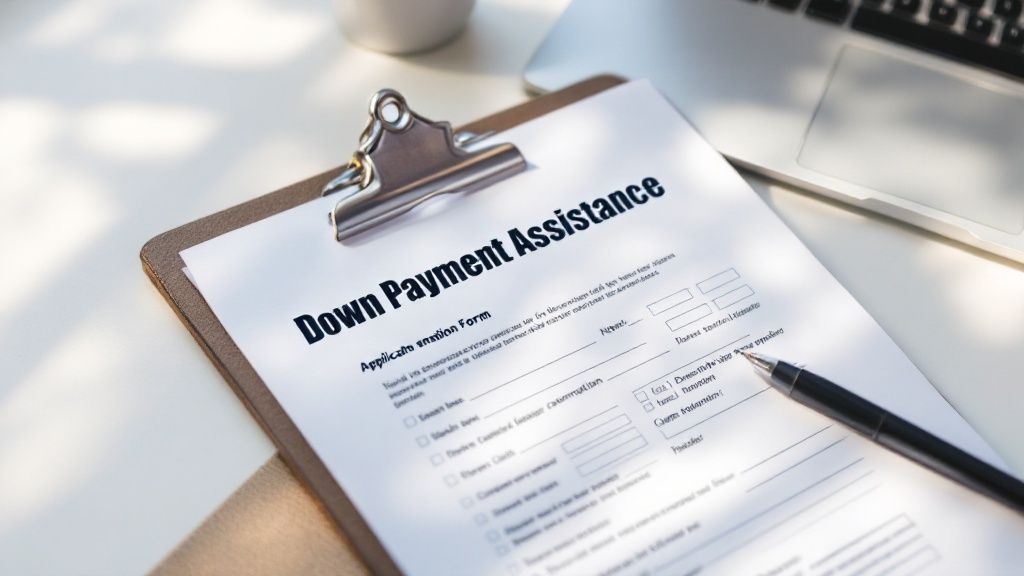
Where to Start Your Search
Your search for financial help should start at the national and state levels, and then zero in on your specific city or county. These organizations are the gatekeepers for most of the assistance available.
Kick off your search with these essential resources:
- The U.S. Department of Housing and Urban Development (HUD): The HUD website is your best first stop. It has a comprehensive list of homebuying programs for every state and even provides links that take you straight to your state and local housing authorities. It’s the perfect portal to more localized options.
- State Housing Finance Agencies (HFAs): Every state has its own HFA that manages housing programs. For anyone buying in Florida, that’s the Florida Housing Finance Corporation. Their sites offer the most current and detailed info on statewide programs.
- City and County Websites: Don't stop at the state level. Many local governments, like the City of Orlando and Orange County, run their own unique DPA programs to boost homeownership in their communities.
The Critical Role of a DPA-Savvy Lender
Once you have a list of potential programs, your next move is one of the most important: finding the right mortgage lender. Not all lenders are equally experienced with down payment assistance. Many are unfamiliar with the specific paperwork and rules, which can cause significant delays or even jeopardize your purchase.
You need a lender who is experienced and officially approved to work with DPA programs. This kind of lender is more than just a loan officer; they're your guide. They'll help confirm you're eligible, get your application ready, and act as the go-between with the assistance provider. They are your single biggest ally in making sure you get to the closing table.
Preparing Your Application Paperwork
Applying for down payment assistance feels a lot like applying for the mortgage itself. The program provider needs to verify your income, employment, and financial history. Getting all your documents lined up ahead of time will make the whole process go much faster.
Think of your application packet as telling your financial story. When every chapter is complete and in order, it’s easy for the program administrator to give you a quick and confident "yes."
You'll almost certainly need to provide copies of these documents:
- Recent Pay Stubs: Usually covering the last 30 to 60 days.
- Tax Returns: Plan on providing your federal tax returns for the last two years.
- Bank Statements: The most recent two or three months of statements for all your accounts.
- Identification: A clear copy of your driver's license or another government-issued ID.
One last thing—the timeline for getting these funds can really vary. It’s smart to start searching for down payment assistance programs long before you start getting serious about house hunting. Some programs require you to take a homebuyer education course, so you'll want to build in extra time for that. If you manage your expectations and prepare everything upfront, you'll be on a much smoother path to getting that assistance and unlocking the door to your new home.
A Spotlight on Florida and Orlando DPA Programs
Navigating the world of down payment assistance in Florida can feel a bit overwhelming, but it doesn't have to be. Think of it less like a maze and more like a network of opportunities designed to get you into a home.
Here, we'll zero in on the key statewide programs and then bring it local with specific initiatives for Orlando and Orange County. You’ll get a clear roadmap of where to look, how to check if funds are available, and who to talk to.
Statewide Down payment Assistance Options
At the state level, the Florida Housing Finance Corporation (Florida Housing) is the main player. They run several fantastic programs, each built for different types of buyers.
- Florida Assist Program: This offers a deferred second mortgage to help with down payment and closing costs.
- Hometown Heroes Program: This is Florida's way of giving back to essential community workers—including but not limited to teachers, first responders, nurses, and military personnel.
- First Generation Homebuyer Program: A unique program aimed at individuals whose parents have never owned a home.
- Mortgage Credit Certificate (MCC): While not direct down payment cash, this provides a valuable federal tax credit on the mortgage interest you pay each year.
“Florida Housing programs simplify the path to homeownership by pairing assistance with competitive mortgage rates,” notes a representative from the agency.
These programs often blend grants with low-interest or forgivable loans. The key is to check the official Florida Housing website often, as funding cycles open and close. You'll also find the specific income and purchase price limits there.
The good news for homebuyers keeps getting better. The total number of DPA programs nationwide continues to grow, and a solid portion of them are now open to repeat buyers, not just first-timers. There's also a growing focus on helping first-generation buyers, which is a clear sign that the industry is working to make homeownership more accessible for everyone. You can dive deeper into these trends over at Down Payment Resource. (Discover more insights)
Central Florida and Orlando Programs
On top of the state-level help, our local governments in Central Florida offer their own layers of support. Both the City of Orlando and Orange County have programs specifically for their residents.
- City of Orlando Down Payment Assistance Program: Provides funds that can be used for your down payment or closing costs.
- Orange County Homebuyer Assistance: Offers assistance to eligible homebuyers purchasing within the county.
- Neighborhood Stabilization Program (NSP): This program sometimes uses grants to encourage homeownership in specific revitalization areas.
- Utility Connection Fee Waivers: A smaller but still helpful perk that can cover certain utility connection fees for qualified buyers.
Please note that these hyper-local programs almost always require you to complete a homebuyer education course and prove you live (or will live) within a specific area. The city and county housing websites are your go-to sources for updates on when these funds are available.
| Program Name | Assistance Type | Eligibility | Contact |
|---|---|---|---|
| Florida Assist | Deferred Second Mortgage | Based on income and credit | Florida Housing Website |
| Hometown Heroes | Deferred Second Mortgage | Specific professions, income, and credit | Florida Housing Website |
| Orlando DPA Program | Varies by funding | Orlando residents meeting income limits | City of Orlando Housing Department |
| Orange County DPA | Varies by funding | Orange County residents meeting income caps | Orange County Housing and Community Development |
How to Check Funding and Start Your Application
Ready to get started? A little prep work can make the whole process go much more smoothly.
- Get familiar with the official program websites and check them regularly for funding updates. These funds can be first-come, first-served.
- Knock out the required homebuyer education courses. Many are available online and can be done at your own pace.
- Start gathering your paperwork now: pay stubs, bank statements, tax returns, and photo ID.
- Find a lender who is an expert in DPA programs. This is critical—they'll know the ins and outs and can help you avoid any pitfalls.
Tip: Start this process 60 to 90 days before you even think about making an offer. Program funds can disappear quickly once a new cycle opens up.
And for those of you thinking about making the move here, our guide on relocating to Orlando, Florida is packed with neighborhood info and practical tips to help you settle in.
By focusing your search on the big statewide programs and the targeted local initiatives, you can move from just dreaming about a home to actually taking action.
Case Study Of An Orlando Homebuyer
Let's look at a real-world example. Imagine Maria, a teacher living in College Park. She had her eye on a small bungalow but was struggling with the down payment.
She discovered she was eligible for both the Hometown Heroes Program and the City of Orlando's local assistance. By combining them, she was able to significantly reduce her upfront costs.
“Without these programs, I never could have bought my home in Orlando,” Maria noted.
Her success came down to a few key steps:
- She researched program deadlines months in advance so she wouldn't miss the funding window.
- She had all her documents organized and knew the income limits inside and out.
- She specifically chose a lender who had a proven track record with DPA programs.
Use Maria's story as your blueprint. Keep an eye on those official program websites and sign up for their email lists. Staying informed is the best way to stay ahead of the game and make your homeownership dream a reality.
Your Top DPA Questions, Answered
Navigating the world of homebuying assistance can definitely bring up a lot of questions. As you get closer to making an offer, the details really start to matter. We've put together some clear, straightforward answers to the most common questions we hear from aspiring homeowners just like you.
Can I Use DPA with an FHA or VA Loan?
Absolutely. In fact, this is one of the most powerful combinations in home financing today. Many down payment assistance programs are specifically designed to pair up perfectly with government-backed mortgages like FHA and VA loans.
Think of it like stacking compatible offers. FHA loans are already a popular choice because they allow for a low down payment, and VA loans are a fantastic benefit for eligible veterans, often requiring no down payment at all. When you add DPA funds to the mix, you can often cover the required down payment and a significant portion of your closing costs.
This powerful synergy opens the door to homeownership for so many more people. Lenders experienced in this area are very familiar with this process and will help you coordinate both the loan and the assistance for a seamless closing.
How Does DPA Affect My Offer in a Competitive Market?
This is a totally valid concern, but using assistance doesn't have to put you at a disadvantage. It all comes down to positioning your offer to show strength and reliability. The big hurdle to overcome is the outdated perception that DPA slows down the closing process.
Here’s how you can make your DPA-backed offer stand out from the crowd:
- Work with a DPA-savvy team: Your real estate agent and lender should have a proven track record with these programs. Their confidence and experience will put the seller’s agent at ease.
- Get fully pre-approved: Don't just settle for a pre-qualification. A full pre-approval for your primary mortgage shows you are a serious, thoroughly vetted buyer.
- Provide proof of DPA pre-approval: If you can, include documentation showing you are already approved for the assistance funds. This simple step removes a ton of uncertainty for the seller.
When a seller sees that your financing is rock-solid and your team knows exactly how to navigate the process efficiently, using DPA becomes a total non-issue. A well-prepared offer really does speak volumes.
What Happens If I Sell My Home Early?
Life happens, and sometimes a move comes sooner than you planned. What this means for your down payment assistance depends entirely on which type of aid you received. Each program has its own specific rules for this exact scenario.
Let's break down the most common outcomes.
The structure of your DPA—whether it's a grant, a forgivable loan, or a deferred loan—is the key to understanding your obligations if you sell before the term is up.
If you received a grant, you're usually in the clear. As long as you met the initial requirement of living in the home as your primary residence for the required period, there’s typically no repayment obligation. For loans, however, the rules are different.
- Forgivable Loans: These have a "vesting" period, usually somewhere between five and fifteen years. If you sell before that period is over, you'll likely have to repay a prorated amount. For instance, with a 10-year forgivable loan, selling after six years means you'd repay the remaining 40% of the original loan, usually from the proceeds of your sale.
- Deferred Payment Loans: With this type, the full amount becomes due whenever you sell the home, no matter when that is. Since these loans are often interest-free, you simply pay back the original principal amount from your sale profits.
Before you accept any assistance, it's so important to read the fine print and fully understand the repayment terms. Knowing this upfront ensures you can make informed decisions about your future without any unpleasant financial surprises down the road.
Ready to explore your options here in the Orlando area? The team at ACME REAL ESTATE FLORIDA knows the ins and outs of local down payment assistance programs and can connect you with the right experts to get you started. Let's make your Florida homeownership dream a reality. Find out more at our website.
